Aloeus Ox Beetle
Strategus aloeus
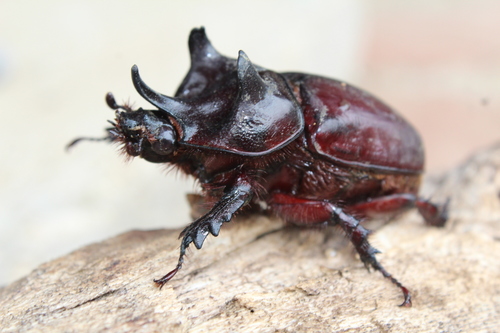
The Aloeus Ox Beetle is a glossy, three-horned titan of the backyard. This impressive rhinoceros beetle is one of the strongest insects in the Americas, transforming garden mulch into a playground for its nocturnal adventures.
Quick Identification
Size
1.0 to 2.4 inches (25 to 60 mm) in length
Colors
Glossy mahogany, deep chocolate brown, or black; males have three distinct horns while females have a small tubercle
Key Features
- Three prominent forward-facing horns on the thorax (males)
- Smooth, highly polished elytra (wing covers)
- Powerful, spined legs designed for digging
- Robust, cylindrical body shape
When You’ll See Them
Geographic range
Where Does the Aloeus Ox Beetle Live?
The Aloeus Ox Beetle is a wide-ranging resident of the Americas, originating in the tropical and subtropical regions of the Western Hemisphere. Its core territory extends from the southern United States—particularly across the Gulf Coast and the Southwest—down through Mexico and Central America, and as far south as Brazil and Peru. It is a common sight in lowland areas where warm temperatures and high humidity support the decomposition of the wood it needs for its life cycle.
Basemap © OpenStreetMap contributors
Behavior
The Aloeus Ox Beetle is a nocturnal powerhouse known for its impressive strength and specialized burrowing capabilities. During the day, these beetles remain hidden deep underground or tucked within decaying vegetation to avoid the heat of the sun and potential predators. They are solitary creatures, spending much of their adult lives searching for food or mates, often using their powerful legs to excavate tunnels in soft soil.
Despite their intimidating, armored appearance, they are completely harmless to humans. They possess no stinger and do not bite; however, their legs are equipped with sharp spines for traction that can feel quite prickly if they walk across skin. In suburban areas, they are famous for their clumsy flight patterns, frequently being found buzzing around porch lights or discovered in the morning near water sources like swimming pools.
EverydayEarth exclusive
Camera Tips
To capture high-quality footage of an Aloeus Ox Beetle, position your AI-powered camera at ground level. These heavy insects are not graceful flyers and spend the majority of their time crawling over the soil, mulch, or leaf litter. A camera with a short focal length or macro capability is ideal, as it allows you to see the intricate details of the male's three horns and the glossy texture of the elytra.
Using a lure is the most effective way to guarantee a 'visit' to your camera station. Place a dish of overripe, fermenting fruit—bananas, peaches, or melon work best—directly in the camera's field of view. To increase the attraction, you can smear a mixture of molasses and a splash of beer onto a piece of bark or a nearby log; the strong scent mimics the fermenting sap they seek out in the wild.
Since these beetles are strictly nocturnal, your camera's infrared (IR) performance is critical. However, because their shells are highly reflective, a direct flash can sometimes cause 'white-out' in the image. Try to angle the camera slightly to the side of your bait station rather than head-on to reduce glare. The best time to set your gear is on humid summer evenings, particularly after a rainstorm, which often triggers adult beetles to emerge from their burrows to feed and mate.
Similar Species
Species that look similar or are commonly confused with Aloeus Ox Beetle.
Frequently Asked Questions
Record Aloeus Ox Beetle at your habitat
Connect a camera to start building your own species record — AI identifies every visitor automatically.