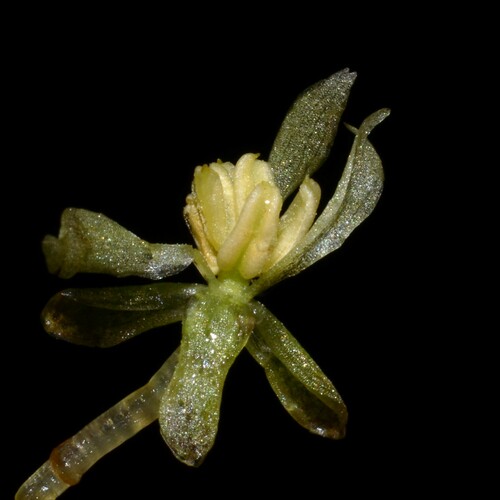
Amazon Frogbit
Limnobium laevigatum
A lush, floating aquatic plant that transforms pond surfaces into vibrant green carpets. Known for its lily-pad-like appearance and long, feathery roots, it is a master of water purification and a sanctuary for aquatic life.
Quick Identification
Size
Leaves 1–4 cm (0.4–1.6 in) in diameter; root systems can trail up to 50 cm (20 in) deep
Colors
Bright lime green upper leaves; pale green to silvery undersides with a spongy, cellular texture
Key Features
- Circular to heart-shaped floating leaves
- Thick, spongy 'aerenchyma' tissue on the leaf underside
- Long, feathery roots often tinted with purple or brown
- Spreads via horizontal runners called stolons
When You’ll See Them
Geographic range
Where Does the Amazon Frogbit Live?
Amazon Frogbit is native to the tropical and subtropical regions of Central and South America, where it thrives in the nutrient-rich waters of the Amazon basin and surrounding wetlands. Over the last several decades, it has expanded significantly beyond its native range, establishing introduced populations in the southern United States, California, Australia, and parts of Southeast Asia. It is particularly successful in warm, lowland areas where water temperatures remain stable throughout the growing season.
Basemap © OpenStreetMap contributors
Behavior
Amazon Frogbit is a highly prolific floating aquatic plant that exhibits two distinct growth forms. In its juvenile state, the leaves lie flat against the water's surface, maximizing surface area for sunlight. As the colony becomes crowded, the plant enters an emergent phase where leaves grow on longer petioles and stand upright, creating a dense, multi-layered canopy that can completely shade out the water below.
Socially, this plant acts as a cornerstone for backyard pond ecosystems. Its dense, trailing root system provides essential nursery habitat for small fish and aquatic invertebrates, while also acting as a natural water filter by absorbing excess nutrients. In the wild, it often forms vast floating mats that move with the wind and current, providing a mobile platform for insects and amphibians.
EverydayEarth exclusive
Camera Tips
When monitoring Amazon Frogbit with a backyard camera, movement triggers are rarely effective because the plant's motion is dictated by wind or current rather than its own volition. Instead, switch your camera to 'Time-Lapse Mode.' Setting the camera to take one photo every 2 to 4 hours will allow you to see the incredible 'creeping' behavior of the plant as it sends out runners (stolons) to colonize open water. You will be able to watch a single plant transform into a carpet over just a few weeks.
For the best visual results, mount your camera on a stake at a 45-degree angle approximately 2 feet above the water's surface. This angle captures the glossy texture of the leaves while reducing the direct glare from the sun. If your camera has a macro lens or high-resolution capability, try to position it near the edge of a cluster to capture the white, three-petaled flowers that occasionally bloom in the summer; they are small and easy to miss but look spectacular on camera.
Because the waxy surface of the leaves is highly reflective, dawn and dusk are the best times for high-quality images. The soft, directional light during these periods reveals the intricate honeycomb-like spongy tissue on the undersides of any leaves that have flipped over. If you are using an underwater camera, focus on the trailing roots, as these often attract fish and amphibians which will trigger your motion sensors and provide a more dynamic view of the Frogbit's role in the ecosystem.
Frequently Asked Questions
Record Amazon Frogbit at your habitat
Connect a camera to start building your own species record — AI identifies every visitor automatically.