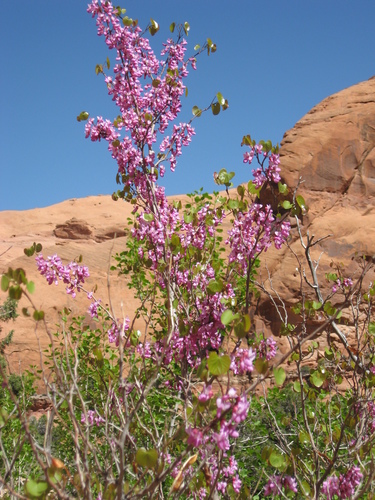
Arizona redbud
Cercis orbiculata
A jewel of the Southwestern canyons, the Arizona redbud transforms arid landscapes with a spectacular display of magenta blooms. This resilient, drought-tolerant tree is a vital spring lifeline for desert pollinators and a stunning centerpiece for any xeric garden.
Quick Identification
Size
A large multi-stemmed shrub or small tree, typically reaching 6–15 feet (2–4.5 metres) in height and width.
Colors
Bright magenta to pale pink flowers; leathery, blue-green to bright green leaves; reddish-brown or purple seed pods; golden-yellow autumn foliage.
Key Features
- Distinctive round or kidney-shaped (orbicular) leathery leaves
- Vibrant pink to purple pea-like flowers that bloom directly on the bark
- Flattened, paper-like reddish seed pods that persist into winter
- Low-branching, spreading growth habit often found in rocky terrain
When You’ll See Them
Geographic range
Where Does the Arizona redbud Live?
This stunning desert-adapted tree is native to the Southwestern United States, thriving primarily in the rugged landscapes of the Colorado Plateau and the Mojave Desert. Its core range is centered in Arizona, particularly within the Grand Canyon and the Mogollon Rim, while extending into the southern reaches of Utah and Nevada. Though it is highly specialized for canyon environments, it has become an increasingly popular choice for native plant landscapes across the arid West.
Basemap © OpenStreetMap contributors
Behavior
While plants do not exhibit social behaviors like animals, the Arizona redbud plays a dynamic role in its ecosystem through a process called cauliflory, where flowers bloom directly from the older wood of the trunk and branches. This makes the nectar easily accessible to a wide variety of pollinators early in the spring when other food sources are scarce. Its growth is slow but steady, focusing on developing a deep, resilient root system that allows it to survive the intense droughts of the American Southwest.
The species also interacts significantly with local fauna. The tree serves as a host for various butterfly larvae and provides structural support for nesting desert birds. In the autumn, the tree enters a dormant phase, dropping its leaves to conserve moisture, but it remains a focal point for wildlife as its persistent seed pods provide a high-protein food source for small mammals and birds throughout the leaner winter months.
EverydayEarth exclusive
Camera Tips
To capture the Arizona redbud's dramatic transformation, set your camera in a fixed position about 5 to 8 feet away from the main canopy. Use a mounting arm attached to a nearby fence or a dedicated T-post to ensure stability. Because the pink blossoms emerge directly from the bark, aim your lens at a junction where thick branches meet the trunk to catch the densest floral clusters during the spring bloom.
For those interested in the visitors the tree attracts, spring is the prime season. Set your camera to a 'Hybrid' mode—taking a high-resolution photo followed by a 10-second video clip. This allows you to identify fast-moving pollinators like the leafcutter bee or the broad-tailed hummingbird that are frequent guests during the March to May flowering window. Ensure your trigger speed is set to its fastest setting to catch these nectar-feeders in action.
Don't ignore the ground level beneath the tree. The Arizona redbud produces flattened, reddish seed pods that eventually fall to the earth. Positioning a second camera at a low 'critter-level' (6 to 12 inches off the ground) can reveal a different side of the tree's ecosystem. You will likely capture ground squirrels, chipmunks, and various desert birds like towhees foraging for the high-protein seeds hidden within the legumes.
Lighting is crucial for this species, as its glossy, leathery leaves can cause significant glare in the harsh desert sun. If possible, orient your camera facing North or South to avoid direct East-West sun exposure into the lens. During the autumn, the leaves turn a brilliant gold; adjusting your saturation settings slightly or ensuring you have a fresh SD card for 'high-trigger' windy days will help you capture the perfect fall foliage timelapse.
Similar Species
Species that look similar or are commonly confused with Arizona redbud.
Frequently Asked Questions
Record Arizona redbud at your habitat
Connect a camera to start building your own species record — AI identifies every visitor automatically.