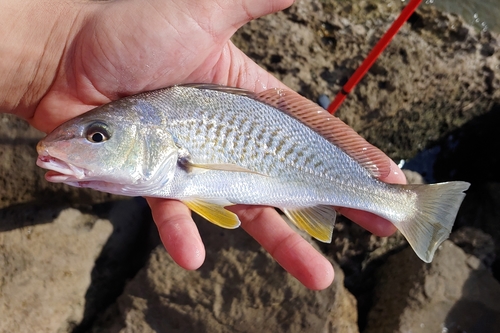
Atlantic Croaker
Micropogonias undulatus
The Atlantic Croaker is the bronze-hued 'drummer' of the coast, famous for its vocal personality and shimmering scales. A favorite for backyard dock observers, this energetic fish brings the soundscape of the estuary to life.
Quick Identification
Size
Typically 30-50 cm (12-20 inches) in length; weights range from 0.5-1 kg (1-2 lbs), though trophy specimens can reach 60 cm and nearly 2.5 kg.
Colors
Silvery-white with a distinct pinkish or bronze iridescent glow; the back and sides feature many small, dark brown spots that form irregular, wavy vertical lines.
Key Features
- 3 to 5 pairs of tiny barbels on the chin
- Inferior mouth with a notched upper jaw
- Deep notch between the two dorsal fins
- Brassy or golden-pink sheen on the scales
When You’ll See Them
Geographic range
Where Does the Atlantic Croaker Live?
Native to the Western Atlantic Ocean, the Atlantic Croaker is a quintessential coastal species of North America. Its core range extends from the temperate waters of Massachusetts down through the Mid-Atlantic and Southeastern United States, wrapping around the entire Gulf of Mexico to the Bay of Campeche. While they are most concentrated in the Chesapeake Bay and the Gulf coast, they are occasionally found as far south as Argentina, representing one of the most widely distributed members of the Sciaenidae family in the hemisphere.
Basemap © OpenStreetMap contributors
Behavior
The Atlantic Croaker is a highly vocal member of the drum family, named for the distinctive 'croaking' sound it produces. This noise is created by the fish vibrating specialized sonic muscles against its swim bladder, often used as a distress signal or during spawning. They are gregarious fish, often traveling in large schools across the floors of bays and estuaries, particularly over muddy or sandy substrates where they can forage effectively.
These fish are known for their seasonal movements, typically spending the warmer months in shallow estuarine waters before migrating offshore to deeper, warmer waters to spawn during the late fall and winter. While they are relatively shy, they are a common sight for coastal residents with dock-mounted cameras, as they are frequently attracted to the structural cover and food sources provided by pilings and submerged debris.
EverydayEarth exclusive
Camera Tips
Capturing the Atlantic Croaker requires an underwater setup, ideally a dock-mounted camera or a waterproof 'drop cam' positioned near the seafloor. Because these fish prefer murky estuarine waters, visibility is your biggest challenge. For the best results, place your camera in areas with moderate current—which helps clear away suspended sediment—and aim the lens toward sandy patches or near the base of dock pilings where they often forage.
Lighting is crucial for revealing their iridescent bronze colors, which can look dull in natural deep-water light. Use a wide-angle lens with integrated infrared (IR) for night viewing, as Croakers are significantly more active after dusk. Avoid using overly bright white lights, which can spook the school; instead, opt for dimmable LEDs or red-light spectrums that allow you to observe their natural bottom-rooting behavior without causing flight.
To guarantee a visit from a school, use a perforated bait canister or a 'chum bag' filled with crushed crabs or oily fish like menhaden. Secure the bait roughly 2-3 feet in front of the lens. If you are using an AI-powered camera, set your triggers for high sensitivity to capture the fast, darting movements they make when competing for food. During the peak summer months, you may even be able to record the vibrating 'croak' sounds if your camera housing includes a sensitive hydrophone.
Similar Species
Species that look similar or are commonly confused with Atlantic Croaker.
Frequently Asked Questions
Record Atlantic Croaker at your habitat
Connect a camera to start building your own species record — AI identifies every visitor automatically.