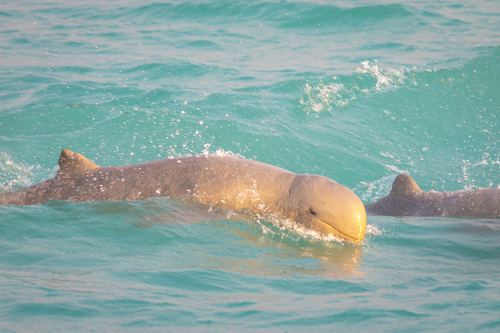
Australian Snubfin Dolphin
Orcaella heinsohni
With its uniquely rounded head and shy personality, the Australian Snubfin Dolphin is one of the world's most elusive marine mammals. Found only in the shallow tropical waters of Northern Australia, this 'smiling' dolphin is a rare prize for any coastal wildlife enthusiast.
Quick Identification
Size
Length: 2.1–2.7 m (7–9 ft); Weight: 100–133 kg (220–293 lbs)
Colors
Distinctly tri-colored with a dark brown cape, light brown flanks, and a white or cream underbelly.
Key Features
- Small, rounded dorsal fin (the 'snub' fin)
- Blunt, rounded head without a protruding beak
- Tri-colored skin pattern
- Highly flexible neck compared to other dolphins
When You’ll See Them
Geographic range
Where Does the Australian Snubfin Dolphin Live?
Native to the Oceania region, the Australian snubfin dolphin is found exclusively in the warm, tropical waters of northern Australia and parts of southern New Guinea. Its core range stretches from the Kimberley region in Western Australia, across the top of the Northern Territory, and down the Queensland coast as far south as the Gladstone area. These dolphins are coastal specialists, rarely venturing far from the shoreline or into the deep open ocean.
Basemap © OpenStreetMap contributors
Behavior
The Australian Snubfin Dolphin is known for its shy and elusive nature, often avoiding the high-energy surface displays common in other dolphin species. They typically travel in small, tight-knit pods of 2 to 6 individuals, though they may gather in larger groups of up to 15 when food is abundant. One of their most fascinating behaviors is 'spitting'—squirting a stream of water from their mouths, which is believed to be a tactic used to confuse or herd schools of fish.
Unlike many of their more famous relatives, snubfins rarely 'bow-ride' or leap completely out of the water. They spend the majority of their time in shallow, murky waters near the coast or in river mouths. While they are generally wary of humans, they show a high degree of social intelligence within their pods and have been observed engaging in complex cooperative hunting strategies near mangroves and tidal flats.
EverydayEarth exclusive
Camera Tips
Capturing the Australian Snubfin Dolphin on camera requires a specialized approach since they are strictly marine and often inhabit murky estuarine waters. For the best results, use a waterproof action camera or a shoreline-mounted trail camera with a high-speed trigger. Position your camera on a stable structure like a pier, jetty, or a low-hanging mangrove branch that overlooks a known foraging area, such as a river mouth or a tidal channel. Setting the camera at an angle of 30 to 45 degrees relative to the water surface helps minimize sun glare and allows for better visibility of the dolphin's head when it surfaces.
Because snubfins have very small dorsal fins and don't make large splashes, you should set your camera to high-definition video or a rapid burst mode. They are most active during the rising tide when baitfish are pushed into the shallows. Look for their distinctive rounded heads breaking the surface or the unique 'spit' of water they occasionally eject. These dolphins are not as predictable as bottlenose dolphins, so patience is key.
A polarizing filter is an essential tool for any water-based wildlife camera setup. It cuts through the reflection on the tropical water, allowing the camera to capture the dolphin's unique three-toned skin patterns even when it is swimming just beneath the surface. If you are using a trail camera from the shore, ensure it has a long-range PIR sensor, as these dolphins may surface 20 to 50 meters away from the bank.
While you cannot attract dolphins with food, you can increase your chances by timing your camera deployments during the dry season (May to October) in Northern Australia. During this time, the water is generally clearer, and the dolphins' movements are more concentrated around permanent river mouths. High-quality lithium batteries are recommended to withstand the tropical heat and ensure the camera remains operational for long periods.
Similar Species
Species that look similar or are commonly confused with Australian Snubfin Dolphin.
Irrawaddy Dolphin
The Irrawaddy dolphin has only two skin tones compared to the snubfin's three, and is found in Southeast Asian waters rather than Australia.
Indo-Pacific Humpback Dolphin
Humpback dolphins have a longer, distinct beak and a more prominent dorsal fin positioned on a hump, whereas the snubfin has a blunt head and no beak.
Frequently Asked Questions
Record Australian Snubfin Dolphin at your habitat
Connect a camera to start building your own species record — AI identifies every visitor automatically.