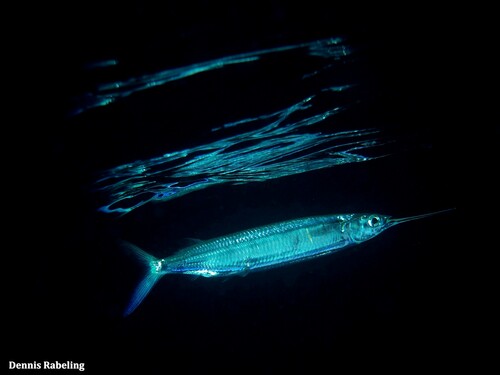
Balao Halfbeak
Hemiramphus balao
The Balao Halfbeak is an architectural marvel of the Atlantic, featuring a needle-like lower jaw and a shimmering silver body designed for life on the surface. A master of the 'skitter,' this agile fish is a favorite sight for coastal explorers and underwater photographers alike.
Quick Identification
Size
30-40 cm (12-16 inches) in length; weighs approximately 150-300 grams (5-10 ounces).
Colors
Brilliant silvery sides and belly with a dark bluish to greenish-black back; the lower lobe of the tail fin often displays a reddish or orange tint.
Key Features
- Extremely elongated lower jaw with a much shorter upper jaw
- Lower lobe of the tail fin is significantly longer than the upper lobe
- Slender, streamlined body with iridescent scales
- Upper part of the snout lacks scales.
When You’ll See Them
Geographic range
Where Does the Balao Halfbeak Live?
The Balao Halfbeak is native to the warm waters of the Atlantic Ocean, stretching from the northeastern coast of the United States down to the shores of southern Brazil. It is most commonly encountered in the tropical corridors of the Caribbean Sea and the Gulf of Mexico, where clear, sunlit surface waters provide ample food. While primarily a Western Atlantic species, it is occasionally reported in the eastern Atlantic along the coast of West Africa, following warm currents and migratory patterns of larger pelagic fish.
Basemap © OpenStreetMap contributors
Behavior
The Balao Halfbeak is a highly social, schooling fish that spends the vast majority of its life cruising just inches below the ocean's surface. They are known for their incredible agility and a unique defense mechanism: when threatened by predators like tuna or mackerel, they leap from the water and 'skitter' across the surface, using their powerful tails to propel themselves over the waves. This behavior is both a survival tactic and a hallmark of the species.
In the wild, they are frequently seen in large groups, often mingling with other halfbeak species like the Ballyhoo. While they are wary of larger creatures, they are quite comfortable around coastal structures. For humans, they are primarily known as a vital link in the marine food web and a prized baitfish for sport fishermen, who value their oily flesh and shimmering scales for trolling.
EverydayEarth exclusive
Camera Tips
Capturing the Balao Halfbeak on camera requires a specialized approach because they stay so close to the water's surface. For the best results, use an underwater action camera mounted to a dock piling or a weighted tripod in shallow water. Aim the lens upward at a 45-degree angle toward the surface, as this will capture the shimmering silver of their bellies and their unique elongated lower jaws against the sunlight.
To attract a school to your camera's field of view, use 'chumming' techniques. Small amounts of ground fish or even floating bread bits can bring them right to the lens. Because they are surface feeders, a floating bait station tethered near your camera setup is highly effective. Ensure your camera is set to a high frame rate (at least 60fps), as these fish move with sudden, darting bursts that can appear blurry at lower settings.
Lighting is your biggest challenge and your best friend. Shoot during the middle of the day when the sun is directly overhead to penetrate the water's surface. If you are filming from a dock above the water, use a circular polarizing filter on your lens to cut through the surface glare. This allows the camera to see 'through' the water rather than just reflecting the sky, revealing the dark green backs of the fish as they cruise by.
Similar Species
Species that look similar or are commonly confused with Balao Halfbeak.
Frequently Asked Questions
Record Balao Halfbeak at your habitat
Connect a camera to start building your own species record — AI identifies every visitor automatically.