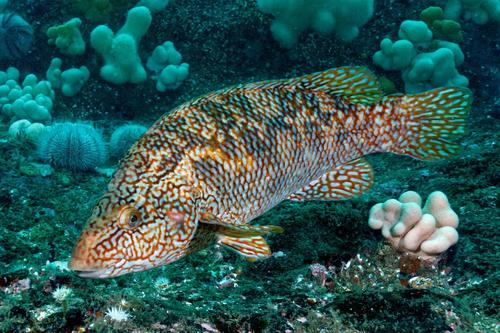
Ballan Wrasse
Labrus bergylta
Vibrant, inquisitive, and a master of the Atlantic reefs, the Ballan Wrasse is the colorful 'architect' of our coastal waters. Known for its remarkable ability to change gender and its role as a natural reef cleaner, this fish is a favorite for underwater explorers.
Quick Identification
Size
Typically 30-50 cm (12-20 in), reaching a maximum of 60 cm (24 in); weight ranges from 1-4.5 kg (2.2-10 lbs)
Colors
Highly variable mottled patterns of green, brown, or reddish-orange; often decorated with small white spots across the body and fins
Key Features
- Large fleshy lips with thick teeth
- Heavy, prominent scales with darker edges
- Single long dorsal fin with sharp spines
- Stocky, powerful body built for rocky environments
When You’ll See Them
Geographic range
Where Does the Ballan Wrasse Live?
The Ballan Wrasse is a native icon of the eastern Atlantic Ocean, flourishing from the chilly coastal waters of Norway and the British Isles down to the warmer temperate shores of Morocco. It is a common sight along the rocky coastlines of Ireland, France, Spain, and Portugal, and its presence extends to the island archipelagos of the Azores, Madeira, and the Canary Islands. While they are strictly saltwater residents, they are rarely found in the open ocean, preferring the safety and abundance of the continental shelf.
Basemap © OpenStreetMap contributors
Behavior
The Ballan Wrasse is a highly territorial and curious fish, often observed patrolling specific 'home ranges' within rocky reefs. They are famously known as 'cleaner fish,' a behavior where they pick parasites and dead skin off larger fish, including farmed salmon. This intelligence and utility make them a fascinating subject for underwater observers, as they often approach cameras with a sense of bold curiosity rather than fear.
These fish are protogynous hermaphrodites, a remarkable social structure where every individual begins life as a female. Within a localized group, if the dominant male is lost, the largest female will undergo a biological transformation to become the new male. During the breeding season, males become industrious nest-builders, meticulously constructing homes out of seaweed and algae in rock crevices to attract mates.
EverydayEarth exclusive
Camera Tips
To capture high-quality footage of a Ballan Wrasse, you need to think like a reef dweller. Mount your underwater camera (like a GoPro or specialized marine trail cam) on a weighted tripod or a secure rock ledge at a depth of 2 to 5 metres during high tide. Look for areas with heavy kelp cover or deep rock fissures, as these are the wrasse's preferred 'living rooms' where they feel most secure.
Because wrasses are naturally inquisitive, you don't necessarily need bait to attract them, but a mesh bag containing crushed mussels or crab can significantly speed up the process. Position the camera so the sun is behind it; the Ballan Wrasse's scales are incredibly reflective, and direct sunlight will highlight the intricate white spotting and marbled greens that make this species so photogenic.
Set your camera to a high frame rate (60fps or higher) to capture their sudden, darting movements as they navigate the surge. Mid-morning is the ideal time for filming, as the overhead sun penetrates the water column best, revealing the true depth of their colors. In late spring and early summer, try to locate a seaweed nest in a crevice; if you keep your distance, you may capture the rare behavior of a male guarding his eggs from potential intruders.
Similar Species
Species that look similar or are commonly confused with Ballan Wrasse.
Frequently Asked Questions
Record Ballan Wrasse at your habitat
Connect a camera to start building your own species record — AI identifies every visitor automatically.