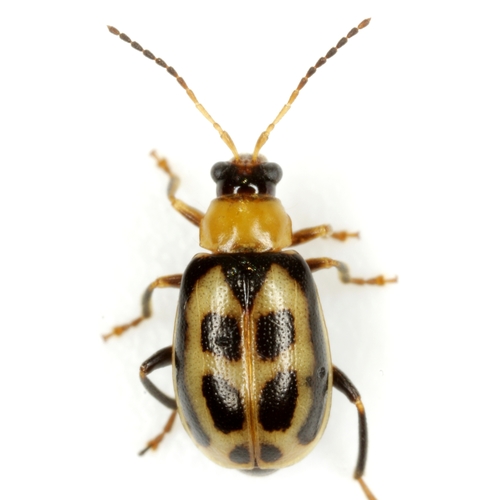
Bean Leaf Beetle
Cerotoma trifurcata
A colorful but elusive resident of the vegetable patch, the Bean Leaf Beetle is a master of disguise and a favorite subject for macro photographers. Recognizable by its unique black 'triangle' marking, this tiny beetle offers a fascinating glimpse into the complex world of garden ecology.
Quick Identification
Size
3.5–5.5 mm (0.14–0.22 inches) in length
Colors
Highly variable body color ranging from yellow and orange to red; typically features four black rectangular spots on the wing covers and a distinctive black triangle at the base of the neck. The head is always black.
Key Features
- Distinctive black triangular mark at the top of the wing covers
- Black head that contrasts with the thorax and wing color
- Four rectangular black spots on the elytra (though some individuals lack these)
- Small, oval-shaped body with a slightly flattened profile
When You’ll See Them
Geographic range
Where Does the Bean Leaf Beetle Live?
Native to North America, the Bean Leaf Beetle is a widespread inhabitant of the Eastern and Midwestern United States, stretching from the Atlantic coast to the edge of the Great Plains. Its range extends north into Southern Canada, particularly in agricultural regions of Ontario and Quebec, and reaches south into parts of Mexico. This beetle is highly adaptable and is commonly found in almost any suburban or rural environment where host plants like snap beans or clover are present.
Basemap © OpenStreetMap contributors
Behavior
Bean Leaf Beetles are highly active insects primarily known for their role as garden and agricultural pests. They emerge from hibernation in early spring, often before bean crops are even planted, surviving on wild legumes or alfalfa. They are particularly famous among observers for their "play dead" defense mechanism, known as thanatosis; when they sense vibration or a predator nearby, they immediately tuck their legs and drop from the leaf into the soil, where their dark undersides make them nearly impossible to find.
These beetles are strong fliers and are most active during the warmest parts of the day. While they are solitary foragers, you will often find multiple individuals on a single host plant if the food source is high quality. Their life cycle is closely tied to the soil, where females lay eggs and larvae develop, meaning their presence in a backyard is usually a sign of healthy, untreated garden soil nearby.
EverydayEarth exclusive
Camera Tips
To successfully capture a Bean Leaf Beetle on camera, you must think small. Standard trail cameras positioned for mammals will likely miss these 5mm insects. You will need a camera capable of macro photography or an AI-powered backyard camera with a very close focal point. Position your lens within 4 to 8 inches of the host plant's foliage, specifically focusing on the tender new growth of green beans or soybeans, which are their preferred feeding sites.
Because these beetles are extremely sensitive to movement and shadows, mounting the camera on a stable stake rather than holding it by hand is essential. Angle your camera slightly upward to view the undersides of the leaves; Bean Leaf Beetles often hide there to avoid the direct midday sun and predators. If your camera has a time-lapse mode, set it to trigger every 1-2 minutes during the afternoon, as their small mass is often insufficient to trigger standard PIR motion sensors.
Lighting is your best friend when filming insects. Choose a spot in the garden that receives bright, filtered sunlight. Harsh, direct sun can wash out the beetle's vibrant orange or red colors, while too much shade will make the black markings blend into the shadows. Late morning, once the dew has dried but before the intense heat of mid-afternoon, provides the best natural lighting for capturing their metallic sheen and intricate spot patterns.
Similar Species
Species that look similar or are commonly confused with Bean Leaf Beetle.
Frequently Asked Questions
Record Bean Leaf Beetle at your habitat
Connect a camera to start building your own species record — AI identifies every visitor automatically.