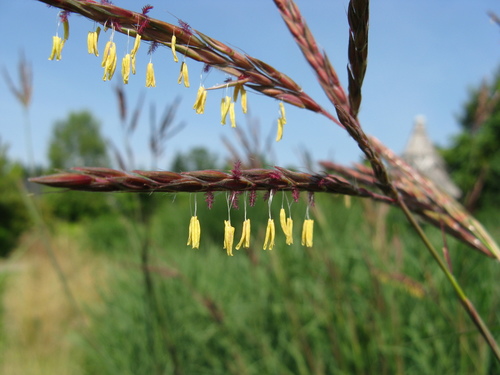
big bluestem
Andropogon gerardi
The undisputed king of the American tallgrass prairie, Big Bluestem stands as a towering symbol of the wild heartland with its iconic 'turkeyfoot' seeds and deep-rooted resilience.
Quick Identification
Size
Height: 1.5–3 m (5–10 ft); Root depth: 2–3 m (6–10 ft)
Colors
Blue-green stems in summer; reddish-bronze to copper in autumn; purplish-red seed heads
Key Features
- Distinctive 'turkeyfoot' seed head with three finger-like spikes
- Tall, sturdy stems reaching up to 8 feet or more
- Base of the stem is typically blue or purplish
- Deep, fibrous root system that provides excellent drought resistance
When You’ll See Them
Geographic range
Where Does the big bluestem Live?
Big bluestem is native to North America, flourishing across the central and eastern regions of the United States and southern Canada. This dominant prairie grass forms the backbone of the Great Plains, stretching from the foothills of the Rockies to the Atlantic coast and south into northern Mexico, where it thrives in diverse soil types from moist lowlands to dry uplands.
Basemap © OpenStreetMap contributors
Behavior
In the backyard or wild prairie, big bluestem acts as a foundational species. It provides critical structural habitat for ground-nesting birds and serves as a larval host plant for several species of skipper butterflies. During the winter, its sturdy stalks remain upright even under heavy snow, providing essential thermal cover and a reliable seed source for small mammals and wintering birds when other food sources are buried.
EverydayEarth exclusive
Camera Tips
Capturing the majesty of big bluestem requires a different approach than filming mobile animals. To showcase its impressive growth cycle, place your camera on a steady tripod or a low fence post about 3-4 feet high. Use time-lapse mode if your camera supports it; this allows you to see the 'turkeyfoot' seed heads emerge and sway in the wind over several weeks during late summer. If you’re looking to capture the wildlife that lives within the grass, aim your camera at a slight downward angle toward the base of the stalks to catch small mammals, snakes, or ground-nesting birds moving through the 'tunnels' the grass creates.
Lighting is the most important factor for this species. Position your camera facing north or south to catch the 'golden hour' light from the east or west without direct lens flare. The reddish-bronze hues of the stems are particularly vibrant during the hour before sunset. Because this grass grows very tall and catches the wind easily, ensure your camera lens is clear of immediate foreground blades that might cause 'focus hunting' or frequent false triggers during windy days. Setting a 'PIR Delay' or lowering sensitivity can help manage wind-induced triggers.
Big bluestem is a magnet for insects and birds. To capture the highest biodiversity, set your camera's trigger sensitivity to 'High' during the blooming phase in August to catch the rapid movement of skipper butterflies and native bees. In the winter, the seeds attract sparrows and finches; placing a camera near a stand of bluestem during or after a snowstorm can yield beautiful shots of birds foraging against the copper-colored stalks. Consider using a macro lens attachment if your camera allows it to capture the intricate, alien-looking flowers that emerge from the turkeyfoot spikes.
Similar Species
Species that look similar or are commonly confused with big bluestem.
Frequently Asked Questions
Record big bluestem at your habitat
Connect a camera to start building your own species record — AI identifies every visitor automatically.