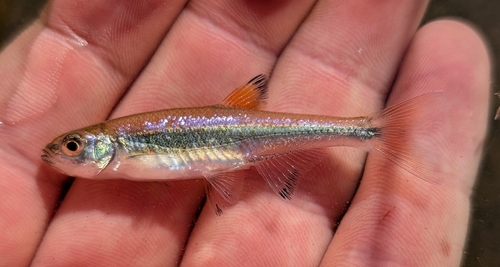
Blacktip Shiner
Lythrurus atrapiculus
A shimmering jewel of southeastern streams, the Blacktip Shiner is famous for its acrobatic swimming and the striking ink-dipped appearance of its dorsal fin. During the spring, these small fish transform into a riot of red and orange, bringing a splash of tropical color to temperate riverbeds.
Quick Identification
Size
Length of 5-6.5 cm (2-2.6 inches); weight is negligible, typically under 5 grams
Colors
Silvery-white to pale olive body; dark lateral stripe; dorsal fin features a prominent black spot at the tip; breeding males develop vivid red or orange on the fins and head
Key Features
- Distinctive black pigment blotch at the tip of the dorsal fin
- Slender, compressed body with a dark stripe running from snout to tail
- Breeding males exhibit brilliant red or orange fin coloration
- Relatively large eyes and a terminal mouth for surface feeding
When You’ll See Them
Geographic range
Where Does the Blacktip Shiner Live?
Native to the North American continent, the Blacktip Shiner is a regional specialist found exclusively in the southeastern United States. Its core population is concentrated within the Gulf Coast drainages of western Georgia, southeastern Alabama, and the Florida Panhandle. Specifically, it inhabits the Apalachicola, Choctawhatchee, Yellow, and Escambia river systems, and is not known to have been introduced outside of this native range.
Basemap © OpenStreetMap contributors
Behavior
The Blacktip Shiner is an energetic, schooling fish that thrives in the clear, flowing waters of the American Southeast. They are primarily mid-water to surface dwellers, constantly patrolling the current for food. During the day, they can be seen in small groups, darting in and out of the shadows provided by overhanging vegetation or submerged woody debris.
Socially, they are peaceful but become highly focused during the spawning season, which typically runs from late spring through summer. Interestingly, like many other shiners in the Lythrurus genus, they may participate in 'nest association,' where they lay their eggs in the nests of larger sunfish or chubs, benefiting from the protection of the larger fish's parental care. They are sensitive to siltation and pollution, making them excellent indicators of stream health.
EverydayEarth exclusive
Camera Tips
To capture the Blacktip Shiner on camera, you will need to move beneath the surface. Using a waterproof action camera, like a GoPro, is the most effective method. Place the camera on a small, weighted tripod or a flat, heavy rock in a shallow 'run'—an area where the water moves steadily over a gravel or sand bottom. Position the lens to face across the current or slightly upstream to catch the fish as they hold their position in the flow.
Lighting is the most critical factor for showing off this species' iridescent scales and namesake black tips. Aim to film during the middle of the day when the sun is highest in the sky, as this allows light to penetrate the water column and illuminate the fish from above. If the water is shallow, use a polarizing filter on your camera housing to eliminate the dancing 'light rays' caused by surface ripples, which can sometimes confuse the autofocus on AI-powered cameras.
While these fish are wary, you can encourage them to visit your camera's field of view by gently stirring up the upstream gravel with your foot. This releases tiny larvae and nutrients into the current, mimicking a natural food event that will often bring a whole school of shiners right to the lens. For the best results, set your camera to a high frame rate (at least 60fps) to ensure their lightning-fast movements are captured in crisp detail without motion blur.
Similar Species
Species that look similar or are commonly confused with Blacktip Shiner.
Frequently Asked Questions
Record Blacktip Shiner at your habitat
Connect a camera to start building your own species record — AI identifies every visitor automatically.