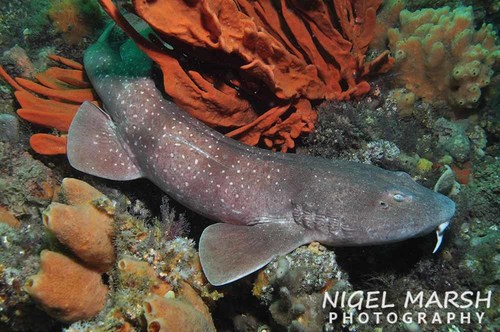
Blind Shark
Brachaelurus waddi
The ultimate survivor of the Australian tide pools, the blind shark is a hardy, nocturnal master of disguise. Known for 'closing its eyes' when handled, this fascinating carpet shark is a hidden gem of the rocky reef.
Quick Identification
Size
Typically 0.9 to 1.2 metres (3 to 4 feet) in length
Colors
Dark brown to grayish-black body often speckled with small, white spots; pale yellowish or cream underside
Key Features
- Pair of long barbels near the nostrils
- Two large dorsal fins positioned far back on the body
- Thick, fleshy eyelids that close when the shark is out of water
- Stocky, muscular build with a broad head
When You’ll See Them
Geographic range
Where Does the Blind Shark Live?
The blind shark is an endemic resident of the coastal waters surrounding eastern Australia. Its range is quite specific, concentrated primarily from the warm subtropical waters of southern Queensland down through the temperate rocky shores of New South Wales. While they are often found in very shallow water near the coast, they are known to inhabit the continental shelf at depths reaching up to 140 metres.
Basemap © OpenStreetMap contributors
Behavior
Despite its intimidating name, the blind shark is a sluggish and harmless species that spends most of its daylight hours hidden away. It is famous for its unique defense mechanism: when caught or removed from the water, it retracts its eyeballs and closes its thick, fleshy eyelids. This behavior led early fishermen to believe the shark was blind, though its vision is perfectly functional in its natural underwater habitat.
This shark is a master of the intertidal zone, possessing an incredible physiological resilience that allows it to survive out of water for extended periods. It achieves this by closing its gill slits to retain moisture. In the wild, they are solitary hunters that use their sensitive barbels to feel for movement along the sea floor, moving with a slow, serpentine motion that allows them to squeeze into tight rocky crevices where other predators cannot reach.
EverydayEarth exclusive
Camera Tips
Capturing a blind shark on camera requires a specialized underwater setup, particularly if you are monitoring a tide pool or a shallow reef in your coastal 'backyard.' Use a fully waterproof trail camera or an action camera with a large external battery pack. Because these sharks are strictly nocturnal, high-quality infrared (IR) illumination is vital. Avoid using bright white LEDs, as these can wash out the shark's dark skin and may cause them to retreat back into their rocky hideaways.
Position your camera low on the sea floor, ideally near the mouth of a cave or a rocky overhang. Blind sharks are creatures of habit and will often follow the same crevices every night while searching for food. Use a heavy weighted mount or a sand anchor to ensure the camera doesn't shift with the tide or surge. Angling the camera slightly upward can help capture the distinctive barbels on their snout as they cruise over the lens.
If you are setting up in a tide pool, timing is everything. Place your camera during low tide in a pool that you know stays deep enough to harbor marine life. The best action usually occurs as the tide begins to rise and the shark becomes more active with the influx of fresh, oxygenated water. Ensure your camera is set to record longer video clips (30-60 seconds) because these sharks move slowly and a short burst might only capture a glimpse of a tail.
Frequently Asked Questions
Record Blind Shark at your habitat
Connect a camera to start building your own species record — AI identifies every visitor automatically.