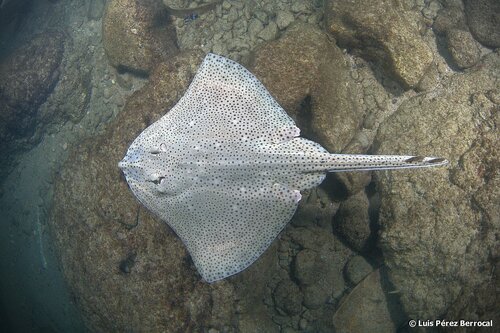
Blonde Skate
Raja brachyura
A master of the sandy seafloor, the Blonde Skate is a ghost of the Atlantic shelf, recognized by its beautifully intricate spotting and graceful, wing-like movement.
Quick Identification
Size
Typically 80-120 cm (31-47 inches) in length; can weigh up to 14 kg (31 lbs)
Colors
Sandy or fawn-colored upper disc with numerous small black spots that extend to the very edge of the wings; white underside
Key Features
- Numerous small dark spots extending to the extreme edge of the disc
- Short, blunt snout forming a wide angle
- Row of 25-50 thorns along the midline of the tail
- Large, diamond-shaped pectoral fins
When You’ll See Them
Geographic range
Where Does the Blonde Skate Live?
Native to the Eastern Atlantic Ocean, the Blonde Skate is a coastal specialist primarily found along the shelf of Western Europe and North Africa. Its core range extends from the northern waters of Norway and the Shetland Islands down through the British Isles, the Bay of Biscay, and into the Mediterranean Sea. You can also find healthy populations as far south as the coast of Morocco and the Western Sahara, where they thrive in the temperate-to-warm coastal waters.
Basemap © OpenStreetMap contributors
Behavior
The Blonde Skate is a sophisticated bottom-dweller that spends much of its time expertly camouflaged against the seafloor. By using its large, wing-like pectoral fins to waft sediment over its body, it can almost entirely disappear into the sand or gravel, leaving only its eyes and spiracles exposed. This 'lie-in-wait' strategy allows it to conserve energy while staying protected from larger predators like sharks. While they appear sedentary during the day, they become much more active under the cover of darkness, patrolling the seabed for food.
Interestingly, Blonde Skates are oviparous, meaning they lay eggs rather than giving birth to live young. These eggs are encased in tough, leathery capsules known as 'Mermaid's Purses,' which feature long horns that help them anchor to seaweed or debris on the ocean floor. While they are generally solitary creatures, they do not show aggression toward humans; however, their skin is covered in sharp dermal denticles and their tails possess rows of protective thorns, which can cause injury if the animal is handled improperly.
EverydayEarth exclusive
Camera Tips
To capture high-quality footage of a Blonde Skate, you will need a specialized underwater housing for your trail camera or a dedicated marine action camera with a deep-cycle battery. Focus your efforts on 'interstitial zones'—areas where sandy flats meet rocky reefs or seagrass beds. These are high-traffic corridors for skates. Secure your camera to a weighted baseplate or a heavy diving weight to ensure it doesn't drift with the tide, and position it about 12 inches off the bottom, angled slightly downward to capture the skate's intricate dorsal patterns.
Scent is the most effective way to draw a Blonde Skate into your camera's field of view. Use a perforated bait pod or a mesh bag filled with oily fish like crushed mackerel, herring, or squid. Skates have a highly developed sense of smell and will follow a scent trail from a considerable distance. Place the bait approximately 3 to 5 feet in front of the lens. This distance ensures the animal is fully in frame when it arrives to investigate the source of the smell.
Because the seafloor can be dark even during the day, ensure your camera has a strong infrared flash or a low-intensity white light. Skates are more active at night, and an IR flash is less likely to spook them compared to a bright white strobe. Set your camera to record 30-second video clips rather than still photos; the way a skate 'walks' across the sand using its pelvic fins or glides gracefully through the water is much more impressive in motion.
Pay close attention to the tides and water clarity. The best footage is usually captured during 'neap tides' when water movement is minimal, leading to less suspended sediment and better visibility. If your 'backyard' is a coastal pier or a shallow bay, try deploying the camera during the summer months when Blonde Skates move into shallower water to lay their eggs. This is your best chance for a close-up encounter.
Frequently Asked Questions
Record Blonde Skate at your habitat
Connect a camera to start building your own species record — AI identifies every visitor automatically.