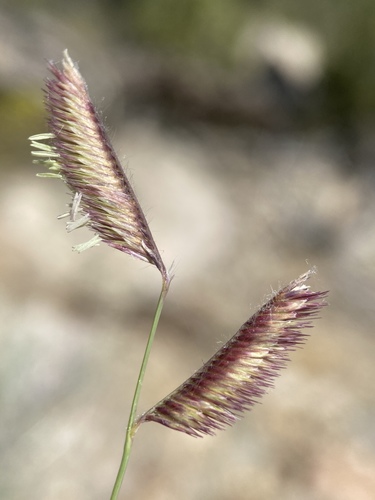
Blue Grama
Bouteloua gracilis
Meet the 'eyebrow grass' of the American West. This resilient, drought-defying perennial is the soul of the shortgrass prairie, offering iconic beauty and vital support for local wildlife.
Quick Identification
Size
Height ranges from 15-50 cm (6-20 in); spread of 30-45 cm (12-18 in)
Colors
Gray-green foliage; seed heads start purplish-green and mature to golden-tan
Key Features
- Distinctive horizontal, eyebrow-shaped seed heads
- Low-growing, tufted clump formation
- Narrow leaf blades often curling with age
- Seed stalks held at a sharp angle from the stem
When You’ll See Them
Geographic range
Where Does the Blue Grama Live?
Native to the vast heartland of North America, Blue Grama is primarily found across the Great Plains, stretching from the Canadian prairies of Alberta and Saskatchewan down through the central United States to the high plateaus of Mexico. It is a defining species of the shortgrass prairie, thriving in states like Colorado, New Mexico, and Montana, though it has also been introduced to other arid regions globally for land reclamation. This resilient grass dominates the landscape where rainfall is sparse and the sun is intense, proving its mettle from the low-lying plains to the foothills of the Rocky Mountains.
Basemap © OpenStreetMap contributors
Behavior
Blue Grama is a resilient, warm-season perennial that bides its time in the spring, waiting for the heat of early summer to begin its growth spurt. As a C4 grass, it is exceptionally efficient at utilizing water and sunlight during the hottest months, making it a cornerstone of the shortgrass prairie and a favorite for sustainable xeriscaping.
Unlike many grasses that grow tall and floppy, Blue Grama remains low and tufted, providing a sturdy ground cover that resists heavy foot traffic and grazing. It plays a vital role in its ecosystem by providing nesting material for native bees and forage for a variety of livestock and wild grazers, including pronghorn and bison.
In the home garden or backyard wild space, Blue Grama is a low-maintenance neighbor that requires very little supplemental water once established. It goes dormant and turns a beautiful tawny-gold in the winter, providing structural interest and food for ground-feeding birds during the coldest months of the year.
EverydayEarth exclusive
Camera Tips
To capture the true beauty of Blue Grama, use a macro lens or a camera setting that allows for a shallow depth of field (f/2.8 to f/4). This will help the iconic 'eyebrow' seed heads stand out against a blurred background. Position your camera low to the ground—roughly 6 to 12 inches high—to get a mouse-eye view that emphasizes the grass's unique horizontal structure.
Lighting is the most critical factor for photographing prairie grasses. Aim for the 'Golden Hour' just after sunrise or before sunset. The low sun angle provides perfect backlighting, causing the translucent seed heads to glow with an ethereal golden halo. Avoid mid-day sun, which can wash out the subtle textures and grayish-green hues of the blades.
Since plants don't trigger traditional PIR motion sensors reliably, use a time-lapse mode on your trail camera. Setting the camera to take one photo every 30 minutes throughout July and August will create a fascinating visual record of the seed heads unfurling and changing from purple to tan. This also helps capture the way the grass sways and dances in the wind, which is a hallmark of the prairie landscape.
If you want to capture wildlife interaction, place your camera near a dense patch of mature seed heads. Small ground-feeding birds like sparrows and finches are frequently attracted to the protein-rich seeds. Mounting the camera on a small tripod or a ground stake will ensure stability for these fine-detailed shots. In winter, keep the camera active; the golden-brown stalks against the white snow provide some of the most striking architectural photos of the season.
Similar Species
Species that look similar or are commonly confused with Blue Grama.
Frequently Asked Questions
Record Blue Grama at your habitat
Connect a camera to start building your own species record — AI identifies every visitor automatically.