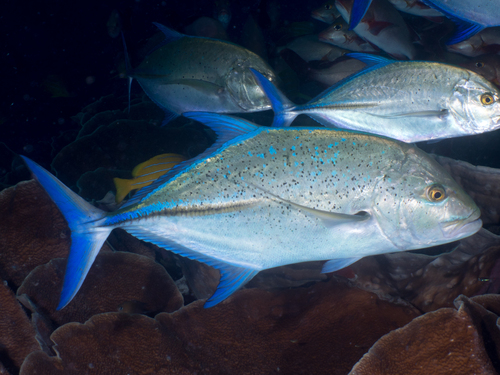
Bluefin Trevally
Caranx melampygus
With its electric blue fins and sleek, spotted body, the Bluefin Trevally is the undisputed crown jewel of the tropical reef. A powerful predator and a favorite of underwater photographers, this 'blue ulua' brings a flash of neon color to the crystal-clear waters of the Indo-Pacific.
Quick Identification
Size
Up to 117 cm (46 in) in length and 43.5 kg (96 lb), though rare above 80 cm (31 in)
Colors
Silver to brassy body with iridescent electric blue and black spots; fins are a distinctive neon blue
Key Features
- Electric blue dorsal, anal, and caudal fins
- Tapered snout with a steep head profile
- Body covered in small blue and black spots
- Deeply forked, powerful tail
When You’ll See Them
Geographic range
Where Does the Bluefin Trevally Live?
The Bluefin Trevally is a wide-ranging marine species native to the tropical and subtropical waters of the Indian and Pacific Oceans. Its massive territory extends from the eastern coast of Africa and the Red Sea across to Central America, reaching as far north as the southern islands of Japan and as far south as northern Australia. While they are most concentrated around island archipelagos like Hawaii and the Maldives, they are also frequently found patrolling the coastal reefs of Southeast Asia and the Pacific coast of Mexico.
Basemap © OpenStreetMap contributors
Behavior
Bluefin Trevally are high-energy apex predators known for their aggressive hunting tactics and remarkable speed. They are often seen patrolling reef edges and drop-offs, either solitarily or in small "wolf packs" that coordinate to flush out prey from coral crevices. They are highly opportunistic, sometimes following larger species like stingrays or sharks to snatch up small fish or crustaceans disturbed by the larger animal's movement.
While they are formidable hunters, they are generally curious and non-aggressive toward divers and snorkelers. In many regions, they display a level of intelligence and adaptability, changing their foraging strategies based on the tide and the presence of baitfish. Their social structure varies by age, with juveniles staying in protected inshore waters while adults dominate the deeper outer reef slopes.
EverydayEarth exclusive
Camera Tips
Capturing the Bluefin Trevally requires an underwater camera setup, such as a waterproof action camera or a specialized marine trail camera housing. If you have a backyard dock or a waterfront property in the tropics, mount your camera near natural bottlenecks in the reef or along the edges of sea walls where current is present, as these are the primary highways for hunting trevally. Position the camera at a slight upward angle toward the surface to capture the shimmering blue of their fins against the natural light filtering through the water.
Since Bluefin Trevally are attracted to movement and the presence of prey, placing the camera near a "cleaning station" or an area with high concentrations of small baitfish will significantly increase your chances of a sighting. You can occasionally lure them into the camera's field of view by using a reflective attractant—such as a spinning piece of polished metal or a shiny spoon—suspended in the water column, which mimics the scales of a wounded fish and triggers their predatory instinct.
The best footage is usually captured during the "golden hours" of dawn and dusk when these fish are in high-gear hunting mode. Set your camera to a high frame rate (at least 60fps) to catch their lightning-fast strikes without motion blur. Because of their highly reflective silver sides, avoid using high-intensity direct flash or artificial lights at night, which can cause "blown-out" white spots on the video; instead, rely on the bright ambient light of midday or use wide-angle diffused underwater LEDs to soften the reflection.
Similar Species
Species that look similar or are commonly confused with Bluefin Trevally.
Frequently Asked Questions
Record Bluefin Trevally at your habitat
Connect a camera to start building your own species record — AI identifies every visitor automatically.