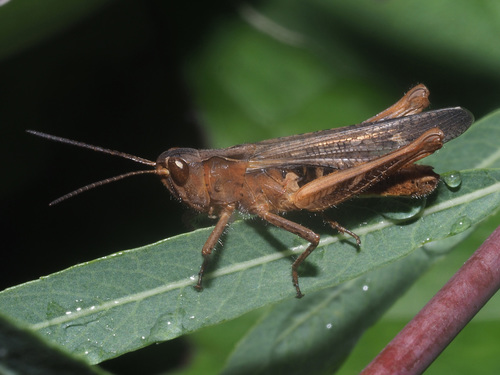
Bow-winged Grasshopper
Chorthippus biguttulus
A champion of the summer soundscape, the Bow-winged Grasshopper is famous for its complex song and incredible leaping ability. This sun-loving insect is a common resident of dry meadows and suburban gardens across the Palearctic.
Quick Identification
Size
Males 13–16 mm (0.5–0.6 in); Females 17–22 mm (0.7–0.9 in)
Colors
Highly variable, ranging from straw-yellow and grey to deep brown or olive green; often features reddish or purple hues on the abdomen tip and legs.
Key Features
- Distinctive 'bowed' or bulging leading edge of the forewings in males
- Side keels of the pronotum (thorax) are sharply angled inward
- Tympana (hearing organs) clearly visible on the first abdominal segment
- Body often mottled with dark spots and stripes for camouflage
When You’ll See Them
Geographic range
Where Does the Bow-winged Grasshopper Live?
Native to the vast Palearctic region, the Bow-winged Grasshopper is a staple of the European and North Asian landscape. Its range stretches from the British Isles and Western Europe all the way through Central Europe to Russia and into Mongolia. It is remarkably common in its core range, thriving in temperate zones where dry, open meadows provide the necessary warmth for its life cycle.
Basemap © OpenStreetMap contributors
Behavior
The Bow-winged Grasshopper is a master of the summer meadow, spending the majority of its day basking in the sun to maintain its metabolic rate. It is particularly famous for its acoustic communication; males produce a rhythmic song by rubbing their hind legs against their wings, creating a series of chirps that gradually descend in frequency. This 'singing' is not just for show; it is a complex language used to attract mates and establish territory in crowded grasslands.
When threatened, these grasshoppers rely on their incredible camouflage and powerful hind legs. They can catapult themselves several feet into the air in a split second, often unfolding their wings for a short, erratic flight to confuse predators like birds or spiders. Despite their high activity levels, they are solitary creatures that only interact during the breeding season, which peaks during the hottest months of the year.
EverydayEarth exclusive
Camera Tips
To capture high-quality footage of a Bow-winged Grasshopper, you need to get low. These insects spend their lives navigating a forest of grass, so your camera should be positioned no more than 5 to 10 centimeters off the ground. A 'macro' lens or a camera with a close-focusing distance is essential for seeing the fine details of their wings and pronotum. Using a small tripod or even a beanbag to stabilize the camera on the soil will give you the steady shot needed for such a small subject.
Positioning your camera near 'basking platforms' is a pro tip for backyard wildlife watchers. Find a flat, dark stone or a piece of weathered wood in a south-facing, sunny spot. Because grasshoppers are ectothermic, they will seek out these warm surfaces to heat up in the morning. By focusing your camera on one of these spots, you are much more likely to capture them sitting still rather than jumping past the lens in a blur of motion.
Lighting is your best friend when filming insects. The best time to record is between 11 AM and 3 PM on a bright, cloudless day when the grasshoppers are most active and vocal. If your camera has a microphone, keep it clear of tall grass that might rustle in the wind, as the male's song is one of the most interesting behaviors to record. Avoid using any chemical lures; instead, simply letting a small patch of your lawn grow long and 'wild' will act as a natural magnet for this species.
Similar Species
Species that look similar or are commonly confused with Bow-winged Grasshopper.
Frequently Asked Questions
Record Bow-winged Grasshopper at your habitat
Connect a camera to start building your own species record — AI identifies every visitor automatically.