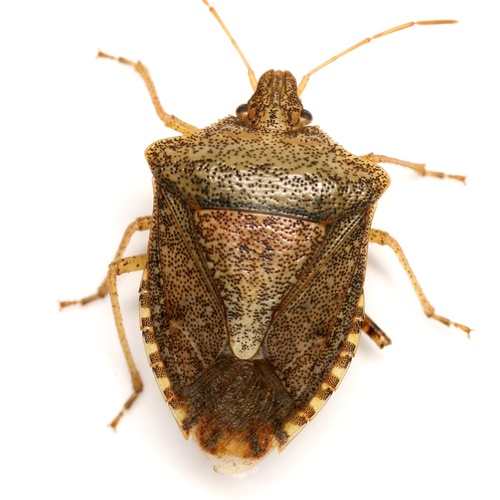
Brown Stink Bug
Euschistus servus
A master of camouflage and chemical defense, the Brown Stink Bug is a common shield-shaped visitor to North American gardens and fields.
Quick Identification
Size
10-15 mm (0.4-0.6 inches) in length; broad shield-shaped body
Colors
Dull grayish-brown to tan upper side; yellowish or pale green underside; no white bands on antennae
Key Features
- Shield-shaped body typical of Pentatomids
- Rounded or slightly pointed shoulders (humeral angles)
- Fine black peppering or specks across the dorsal surface
- Lack of white bands on the antennae (distinguishes from Marmorated Stink Bug)
When You’ll See Them
Geographic range
Where Does the Brown Stink Bug Live?
The Brown Stink Bug is native to the North American continent, where it maintains a widespread and robust presence. Its core territory stretches from southern Canada throughout the entire United States and extends deep into Mexico and parts of Central America. This adaptable insect is equally at home in the vast agricultural heartlands of the Midwest as it is in the humid coastal regions and suburban backyards of the South, making it one of the most common shield bugs encountered by residents across the continent.
Basemap © OpenStreetMap contributors
Behavior
The Brown Stink Bug is a solitary insect known primarily for its defensive capabilities and its role as a generalist plant feeder. Like other members of its family, it possesses specialized glands on the thorax that release a pungent, foul-smelling liquid when the insect is disturbed or handled. This odor serves as a highly effective deterrent against birds, lizards, and other small predators that might otherwise make a meal of them.
These insects are primarily diurnal, meaning they are most active during the daylight hours when they can be found basking on leaves or slowly crawling through vegetation. While they are capable fliers, they often prefer to remain still, relying on their dull brown coloration to blend into bark, dried leaves, or soil. In the late autumn, they exhibit a behavior known as overwintering, where they seek out leaf litter, woodpiles, or even the siding of human structures to survive the cold months in a state of dormancy.
Interaction with humans is mostly incidental, though they are often viewed as pests in agricultural settings and gardens. They do not bite or sting humans, nor do they cause structural damage to homes; however, their tendency to enter houses in large numbers during the fall can make them a significant nuisance. When found indoors, they are best moved outside gently to avoid triggering their signature scent.
EverydayEarth exclusive
Camera Tips
Capturing the Brown Stink Bug on camera requires a focus on micro-habitats within your garden. These insects are relatively slow-moving, making them excellent subjects for AI-powered backyard cameras, provided the lens is positioned correctly. Focus your camera on 'host' plants—specifically fruiting plants like tomatoes, peppers, or sunflowers—where the bugs are likely to linger while feeding. A height of 2 to 4 feet off the ground is usually ideal for capturing them on foliage.
Since these insects are small, use a camera with a short focal distance or a macro-lens attachment if possible. Position the camera to face south to take advantage of the bright midday sun, which highlights the fine 'pep-per-ing' texture on their backs. If you are using a trigger-based camera, ensure the sensitivity is set to high, as the slow movement of a walking bug might not always trigger standard motion sensors. Time-lapse mode is often a better strategy for capturing insect activity on a specific plant.
During the autumn transition, move your camera setups toward the sun-facing walls of your house or near woodpiles. This is when Brown Stink Bugs congregate as they search for overwintering sites. You don't need bait for these insects, as they are drawn to the physical structure of the plants, but keeping a well-watered garden during dry spells can make your backyard a magnet for them. For the best clarity, ensure the background is simple—like a green leaf or a wooden fence—to help the AI identify the brown, shield-shaped silhouette against a contrasting surface.
Similar Species
Species that look similar or are commonly confused with Brown Stink Bug.
Frequently Asked Questions
Record Brown Stink Bug at your habitat
Connect a camera to start building your own species record — AI identifies every visitor automatically.