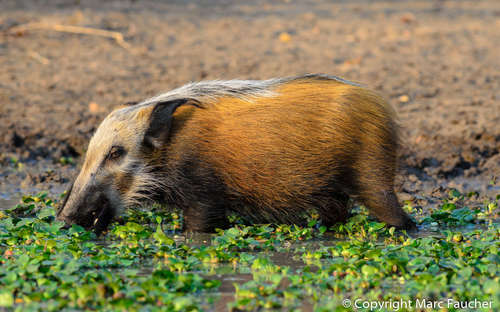
Bushpig
Potamochoerus larvatus
The shaggy-coated 'ghost of the forest,' the Bushpig is a master of the night. With its tufted ears and intelligent eyes, this elusive omnivore is a prize find for any backyard or trail camera enthusiast.
Quick Identification
Size
Length: 100-150 cm (39-59 in); Weight: 45-115 kg (100-250 lbs)
Colors
Varied coat from reddish-brown to grey-black; white or pale mane on the spine; greyish-white facial markings.
Key Features
- Long tufted ears with hair extensions
- Distinctive white mane along the back
- Stocky, muscular build with short, powerful legs
- Lower tusks are short and razor-sharp
When You’ll See Them
Geographic range
Where Does the Bushpig Live?
The Bushpig is native to the African continent, predominantly inhabiting the eastern and southern regions. Its range stretches from Ethiopia and Somalia in the north, down through East Africa into South Africa and West to Angola. Additionally, they are found as introduced populations on the island of Madagascar and the Comoros, where they have adapted well to the local forest ecosystems.
Basemap © OpenStreetMap contributors
Behavior
In areas where they live near humans, they have become remarkably cunning. They are known to raid agricultural crops like maize and sugarcane under the cover of darkness, often learning the schedules of farmers to avoid detection. Despite their somewhat bulky appearance, they are excellent swimmers and can run at high speeds when threatened, making them one of the more elusive large mammals in the African bush.
EverydayEarth exclusive
Camera Tips
Mud wallows are high-traffic zones during the dry season. If you find a depression in the mud with fresh tracks or 'rubbing trees' nearby (trees with mud caked on the bark at leg height), you have found a prime camera spot. Set your camera to video mode or a 3-shot burst with a short trigger interval, as bushpigs usually travel in a line; the first pig might trigger the camera, but the rest of the family follows closely behind.
If you are struggling to get them to stop in front of the lens, consider using a scent lure rather than food. A small amount of fermented fruit or even molasses smeared on a log can encourage them to linger and root around, providing much better identification shots of their unique facial markings. Ensure your camera is secured in a protective steel box or mounted very securely, as bushpigs are incredibly strong and may rub against or tusk at any new object in their territory.
Similar Species
Species that look similar or are commonly confused with Bushpig.
Warthog
Diurnal (day-active), has large facial warts, and runs with its tail pointing straight up.
Red River Hog
Brighter orange-red fur and more prominent white facial stripes; found mostly in West and Central African rainforests.
Giant Forest Hog
Much larger (up to 275kg) and covered in coarse black hair, lacking the white mane and tufted ears of the bushpig.
Frequently Asked Questions
Record Bushpig at your habitat
Connect a camera to start building your own species record — AI identifies every visitor automatically.