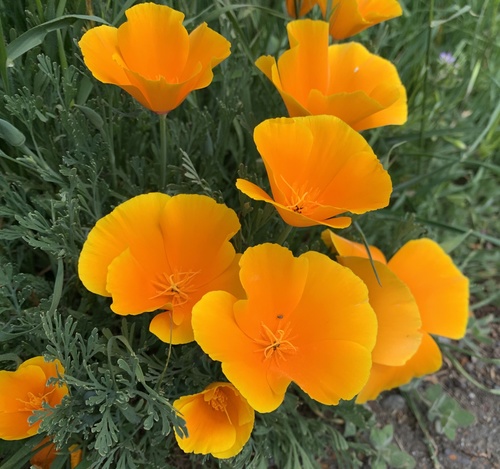
California poppy
Eschscholzia californica
The California poppy is a vibrant symbol of the West, painting hillsides in brilliant shades of gold and orange. This hardy wildflower is a favorite for backyard gardeners and pollinators alike, famous for closing its petals like a sleepy eye when the sun goes down.
Quick Identification
Size
5-60 cm (2-24 inches) tall with a spread of up to 30 cm (12 inches)
Colors
Brilliant orange, golden yellow, or creamy white petals with fine blue-green foliage
Key Features
- Four satin-textured petals forming a cup shape
- Finely divided, lace-like blue-green foliage
- Petals close at night or in cloudy weather
- A distinct pinkish-orange 'rim' at the base of the flower
- Pointed, conical flower buds
When You’ll See Them
Geographic range
Where Does the California poppy Live?
The California poppy is native to the western coast of North America, blanketing hillsides from Washington state down through the Baja Peninsula in Mexico. While it is the iconic state flower of California, it has successfully naturalized in many temperate regions globally, often found flourishing in Mediterranean climates. This hardy wildflower thrives in the sun-drenched landscapes of the United States and is a common sight in desert washes and coastal scrub.
Basemap © OpenStreetMap contributors
Behavior
California poppies are famous for their 'nyctinastic' behavior, a fascinating trait where the flowers respond to light levels and temperature. Every evening as the sun sets, the petals tightly curl upward to form a slender cylinder, reopening only when the morning warmth returns. This movement is thought to protect the pollen from moisture and keep the reproductive parts warm. During heavy cloud cover or rain, the poppies will remain closed, patiently waiting for the return of the sun.
In the backyard ecosystem, these poppies act as a vital resource for pollinators. While they do not produce nectar, they provide an abundance of nutrient-rich pollen that attracts a wide variety of native bees, including bumblebees and sweat bees. They are exceptionally hardy and drought-tolerant, often appearing in areas where other plants struggle, using a deep taproot to find moisture deep underground during the dry summer months.
EverydayEarth exclusive
Camera Tips
Capturing the California poppy with a backyard camera requires a different strategy than mobile wildlife. To showcase their unique 'sleep' behavior, set your camera to time-lapse mode. Position the camera on a low tripod or a ground stake, angled slightly upward or level with the flower heads (about 12-18 inches off the ground). This captures the dramatic opening of the petals as the morning sun hits them and the closing sequence at dusk.
Since these flowers are highly reactive to light, the best footage is captured on clear, sunny days. Avoid placing the camera in a spot where shadows from trees or buildings will fall on the poppies prematurely, as this will trigger the flowers to close while the rest of your garden is still bright. High-resolution photos are best taken during 'Golden Hour' (late afternoon) when the orange petals seem to glow from within.
While poppies don't need bait, they are magnets for pollinators. To capture action shots of visitors, set your camera's motion trigger to high sensitivity. This will help you film the native bees and butterflies that dive into the center of the blossoms for pollen. If your camera has a macro or close-focus setting, use it to see the intricate details of the pollen-covered stamens.
Consider the wind when setting up your gear. Because poppies have thin stems, they move significantly in a breeze. If your camera is set to motion-triggered video, a windy day may result in many empty clips. Using a windbreak or choosing a calm day for your primary recording will ensure you get the clearest, most stable footage of these golden blooms.
Similar Species
Species that look similar or are commonly confused with California poppy.
Frequently Asked Questions
Record California poppy at your habitat
Connect a camera to start building your own species record — AI identifies every visitor automatically.