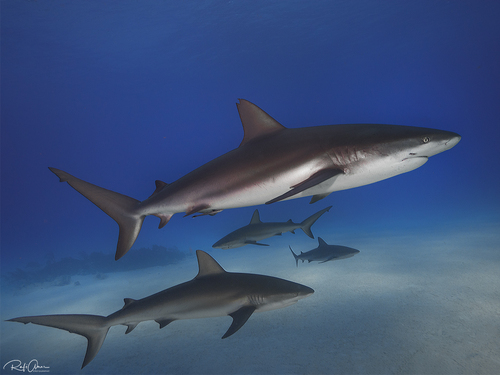
Caribbean Reef Shark
Carcharhinus perezii
The Caribbean reef shark is the silent guardian of the Atlantic's coral gardens. With its powerful, streamlined body and calm presence, it is the most frequently encountered large shark in the Caribbean basin.
Quick Identification
Size
Typically 2 to 2.5 m (6.5 to 8.2 ft) in length, reaching a maximum of 3 m (10 ft); weights average around 70 kg (154 lbs).
Colors
Dark gray to gray-brown on the upper body with a starkly contrasting white or light yellow underside; fins are dusky in color but lack prominent markings.
Key Features
- Robust and streamlined requiem shark profile
- Short free rear tip on the second dorsal fin
- Dusky-colored fins without distinct black or white tips
- Large, circular eyes and a broadly rounded snout
When You’ll See Them
Geographic range
Where Does the Caribbean Reef Shark Live?
The Caribbean reef shark is native to the tropical waters of the Western Atlantic Ocean. Its core range stretches from the sunny coasts of Florida and the Bahamas down through the entire Caribbean Sea and the Gulf of Mexico, reaching as far south as the coast of Brazil. While they are most abundant in the crystal-clear waters of island archipelagos, they are occasionally found in deeper offshore waters of the continental shelf.
Basemap © OpenStreetMap contributors
Behavior
The Caribbean reef shark is the quintessential inhabitant of the Western Atlantic's coral ecosystems. While they are apex predators, they are often surprisingly sedentary compared to other requiem sharks, frequently seen resting motionless on the sandy bottom or inside caves—a behavior once thought impossible for sharks that must swim to breathe. They are social animals often found in small groups near reef drop-offs, where they use their keen senses to monitor the environment for the vibrations of struggling prey.
In terms of human interaction, these sharks are generally indifferent but can become bold and assertive in the presence of food, particularly during organized shark-feeding dives. They are not considered naturally aggressive toward divers unless provoked or if a feeding frenzy is triggered. Their presence is a vital indicator of a healthy reef ecosystem, as they regulate the populations of mid-level predators.
EverydayEarth exclusive
Camera Tips
Capturing the Caribbean reef shark requires specialized underwater camera equipment or a dedicated marine housing. For the best results, position your camera near a 'cleaning station' or a known reef pass where sharks naturally patrol. A wide-angle lens is essential to capture their full 2-meter length when they swim close to the lens. Ensure your housing is rated for at least 30 meters of depth to prevent leaks in high-pressure environments.
Lighting is your biggest challenge underwater. If you are using a trail-style underwater camera, set it up in a spot with high ambient light during the day, or utilize external underwater strobes for night captures. The Caribbean reef shark is naturally curious and will often investigate a camera rig; however, avoid using shiny or dangling parts that they might mistake for a lure, as they may attempt to 'taste' the housing.
For AI-powered detection, focus your camera on high-traffic reef corners. If local regulations allow, small amounts of oily bait (chum) in a perforated container can keep the sharks in the frame longer for better identification. Always monitor the tides; these sharks are most active when the current is moving, bringing fresh nutrients and prey through the reef structures.
Similar Species
Species that look similar or are commonly confused with Caribbean Reef Shark.
Frequently Asked Questions
Record Caribbean Reef Shark at your habitat
Connect a camera to start building your own species record — AI identifies every visitor automatically.