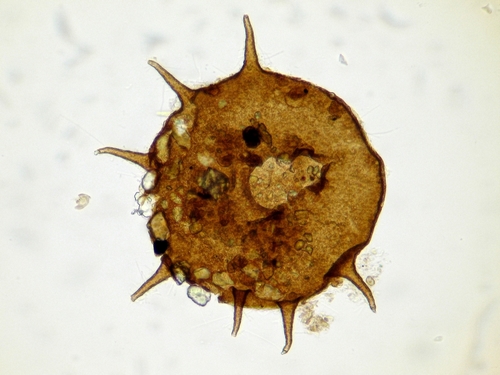
Centropyxis aculeata
Centropyxis aculeata
The ultimate microscopic architect, Centropyxis aculeata builds a spiny suit of armor from grains of sand. Found in everything from forest moss to backyard ponds, these tiny titans are masters of survival in the hidden world beneath our feet.
Quick Identification
Size
100–250 micrometers (0.004–0.01 inches) in length
Colors
Shell is typically yellowish, brown, or grayish; semi-transparent to opaque depending on mineral accumulation
Key Features
- Flattened, cap-shaped shell (test) with distinct spines
- Eccentric aperture (opening) located on the underside
- Shell constructed from glued mineral particles and sand
- Finger-like lobose pseudopodia used for movement
When You’ll See Them
Geographic range
Where Does the Centropyxis aculeata Live?
Centropyxis aculeata is a truly cosmopolitan species, inhabiting virtually every corner of the globe where moisture is present. From the lush wetlands of North America and Europe to the extreme environments of the Arctic and Antarctic, this resilient amoeba thrives across a vast array of latitudes. Its ability to form cysts—a dormant, protected state—allows it to survive dry spells and be transported long distances by wind or water, ensuring its presence in almost any backyard pond or damp forest floor worldwide.
Basemap © OpenStreetMap contributors
Behavior
Centropyxis aculeata is a fascinating testate amoeba, a microscopic architect that constructs its own protective shell, or 'test.' Unlike the soft-bodied amoebae taught in basic biology, this species lives within a sturdy casing made from environmental debris like sand grains and mineral particles, which it cements together using organic secretions. It moves and feeds using lobose pseudopodia—blunt, finger-like extensions of its cytoplasm that it stretches through an opening in its shell to pull itself along submerged surfaces or to engulf prey.
These micro-organisms are solitary but can be found in massive densities in healthy ecosystems. They are sensitive to environmental changes, particularly pH levels and moisture, making them excellent bio-indicators for soil and water health. While they are invisible to the naked eye, their behavior is remarkably complex; they carefully select and position specific mineral grains to ensure their shell is structurally sound and balanced, a process akin to a microscopic hermit crab building its own armor.
EverydayEarth exclusive
Camera Tips
Capturing the Centropyxis aculeata requires a specialized approach since it is a microscopic organism. Standard backyard trail cameras will not see this species; instead, use an AI-powered smart microscope or a macro-lens attachment for your smartphone capable of at least 100x to 400x magnification. To 'trap' them, collect a sample of pond sediment or squeeze the water out of a clump of damp moss into a shallow petri dish. Place the dish on a stable surface under a light source to allow the organisms to settle and begin moving.
For the best visual results, use backlighting or 'darkfield' illumination techniques, which make the amoeba's mineral-encrusted shell pop against the background. Position your lens directly over the water's surface or use a glass slide if your camera system supports it. Since these organisms move slowly, set your camera to a time-lapse mode, capturing one frame every 5 to 10 seconds. This will reveal their surprising 'walking' motion as they extend their pseudopodia to trek across the mineral landscape of the dish.
AI detection works best when the specimen is active. Avoid using high-heat lamps that might dry out the sample; instead, use cool LED lighting. If you are sampling from a backyard pond, focus your search on the 'benthic zone'—the very bottom layer of debris where these shell-builders scavenge. You can encourage them to congregate by adding a tiny drop of diluted cereal grass media or a single grain of rice to the sample, which promotes the growth of the bacteria they feed on, bringing the Centropyxis aculeata into your camera's field of view.
Similar Species
Species that look similar or are commonly confused with Centropyxis aculeata.
Frequently Asked Questions
Record Centropyxis aculeata at your habitat
Connect a camera to start building your own species record — AI identifies every visitor automatically.