Coast Mole
Scapanus orarius
A subterranean architect of the Pacific Northwest, the Coast Mole is a velvety wonder that keeps our soils healthy and aerated. Though rarely seen above ground, this powerful digger is a vital part of the coastal ecosystem from BC to California.
Quick Identification
Size
Length: 140–180 mm (5.5–7.1 in); Weight: 60–90 g (2.1–3.2 oz)
Colors
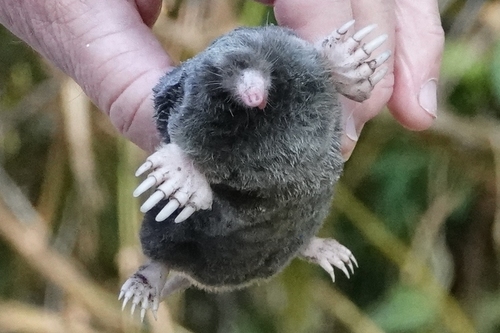
Uniformly deep black to dark grayish-brown with a velvety sheen; naked pinkish-white snout and feet.
Key Features
- Velvety, dark, non-directional fur
- Broad, paddle-like front paws with strong claws
- Pointed, hairless snout and short, sparsely haired tail
- Tiny, almost invisible eyes and no external ears
When You’ll See Them
Geographic range
Where Does the Coast Mole Live?
Native to the lush Pacific coast of North America, the Coast Mole thrives in the temperate rain forests and fertile valleys of the West. Its core range extends from the southwestern corner of British Columbia in Canada, stretching southward through the coastal regions of Washington and Oregon, and reaching its southern limit in the redwood forests of northwestern California. These moles are generally found in the lowlands and foothills where the soil remains moist enough for easy tunneling throughout the year.
Basemap © OpenStreetMap contributors
Behavior
The Coast Mole is a master of the subterranean world, spending almost its entire life in a complex network of tunnels. Unlike many other mammals, they are not strictly nocturnal or diurnal; instead, they operate in short bursts of activity followed by rest throughout a 24-hour cycle. They are highly territorial and solitary, only coming together briefly during the late winter breeding season. Their presence is usually signaled by the classic 'mole hills' of pushed-up soil, which serve as disposal sites for dirt excavated during tunnel maintenance.
While they are often maligned by gardeners for their tunneling, Coast Moles are actually beneficial to the ecosystem. They aerate the soil and consume a massive amount of soil-dwelling pests. While they rarely surface, they may emerge at night or during heavy rains when their tunnels flood. Humans rarely see them alive, but their impact on the soil structure and drainage in Pacific Northwest gardens is significant.
EverydayEarth exclusive
Camera Tips
Capturing a Coast Mole on camera requires a bit of strategy because they rarely emerge from their tunnels. The best way to 'see' them is to focus on active molehills or surface tunnels. If you notice fresh soil being pushed up, place your camera very low to the ground, angled directly at the newest mound. Because they are sensitive to vibrations, use a camera with a silent shutter or a completely electronic trigger if possible.
The most successful shots usually occur when a mole is forced to the surface. This happens most often during periods of heavy, saturating rain when tunnels become waterlogged. Positioning a waterproof trail camera near a garden edge or a known tunnel exit during a rainy week increases your chances. Another trick is to look for 'surface runs'—ridges in the grass where the mole is tunneling just beneath the roots. Setting a camera at ground level along these ridges can catch them if they pop their head out to clear debris.
For settings, use a fast trigger speed and high-sensitivity PIR (Passive Infrared) motion sensor. Since these animals are small and fast, a video mode of 10-20 seconds is often better than a still photo, as it helps you distinguish the movement of the dirt from the animal itself. If you are using bait, focus on 'scent' rather than food; some researchers use earthworm-scented lures, but simply keeping the soil moist in the camera's field of view is often enough of a natural draw.
Similar Species
Species that look similar or are commonly confused with Coast Mole.
Frequently Asked Questions
Record Coast Mole at your habitat
Connect a camera to start building your own species record — AI identifies every visitor automatically.