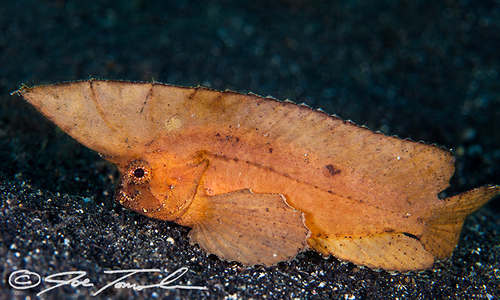
Cockatoo Waspfish
Ablabys taenianotus
A master of underwater disguise, the Cockatoo Waspfish mimics a drifting leaf to hide from predators. With its spectacular dorsal crest and rhythmic swaying, it is one of the reef's most captivating ambush hunters.
Quick Identification
Size
Small and compressed, typically reaching 10–15 cm (4–6 inches) in length.
Colors
Mottled patterns of brown, mahogany, or dull red; some individuals appear creamy yellow or silver-gray to match surrounding reef debris.
Key Features
- High dorsal fin resembling a cockatoo crest starting above the eyes
- Deeply compressed, leaf-like body shape
- Swaying motion that mimics drifting seaweed
- Venomous spines on the dorsal and anal fins
When You’ll See Them
Geographic range
Where Does the Cockatoo Waspfish Live?
Where Does the Cockatoo Waspfish Live? This fascinating marine species is widely distributed across the tropical and subtropical waters of the Indo-West Pacific. Its core range extends from the southern reaches of Japan and the Ryukyu Islands down through the Philippines, Malaysia, and the vast archipelago of Indonesia. It is also commonly sighted along the northern coasts of Australia, from Western Australia to the Great Barrier Reef, and westward toward the Andaman Sea and the Solomon Islands. Unlike many reef fish that prefer deep coral walls, the Cockatoo Waspfish is most at home in shallow, coastal environments where sea surge and debris are common.
Basemap © OpenStreetMap contributors
Behavior
The Cockatoo Waspfish is a master of mimicry, utilizing its lateral compression and unique swaying motion to blend in with the environment. Instead of swimming like a traditional fish, it often 'walks' across the seabed using its pelvic fins or sways rhythmically with the surge to appear like a piece of dead leaf or seagrass. This deceptive behavior protects it from larger predators and allows it to get within striking distance of its own prey.
Socially, these fish are usually solitary and highly territorial regarding their small patch of reef or rubble. They are ambush predators that rely entirely on their camouflage; they can remain perfectly still for hours, waiting for the right moment to strike. While not aggressive toward humans, they possess potent venom in their dorsal spines, which serves as a powerful deterrent against anything that might try to swallow or step on them.
EverydayEarth exclusive
Camera Tips
Capturing the Cockatoo Waspfish requires an underwater setup, ideally a waterproof action camera or a housed mirrorless system mounted on a weighted tray. Because these fish inhabit shallow rubble zones where the water can be surgey, a heavy tripod or a stable mount is essential to prevent your footage from being shaky. Look for 'mucky' areas near reef edges or seagrass patches where dead leaves accumulate, as this is their preferred hiding spot.
Lighting is your biggest challenge at the depths where Waspfish thrive. While they live in shallow water, their mottled brown and red colors often appear dull on camera without assistance. Use a high-quality video light (at least 2000 lumens) to bring out the vibrant mahogany and red hues. Since they are sedentary, you can get the camera quite close—aim for a macro lens setting or a close-up filter to capture the intricate details of their 'cockatoo' crest and their leaf-like skin texture.
Set your camera to a high frame rate (60fps or higher) to capture their unique swaying movement in slow motion; this movement is their most distinctive trait and looks spectacular when stabilized. If you are setting an autonomous underwater camera, place it near a known cleaning station or a patch of rubble where you have spotted them before. Be patient, as their camouflage is so effective that you might not realize they are in the frame until they move with the current.
Similar Species
Species that look similar or are commonly confused with Cockatoo Waspfish.
Frequently Asked Questions
Record Cockatoo Waspfish at your habitat
Connect a camera to start building your own species record — AI identifies every visitor automatically.