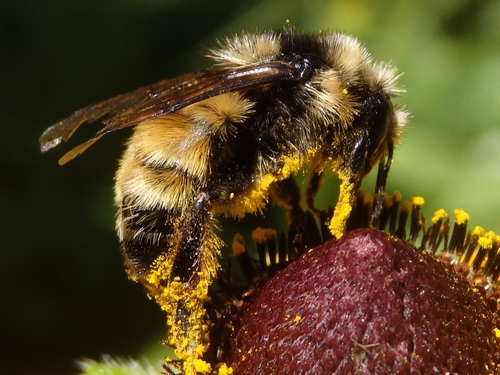
Colorado Black-notched Bumble Bee
Bombus bifarius
A colorful icon of the Rocky Mountains, the Colorado Black-notched Bumble Bee is a hardy alpine pollinator known for its vivid orange bands and its incredible ability to forage in the thin, cool air of high altitudes.
Quick Identification
Size
Length: 8-14 mm (0.3-0.55 in); Wingspan: 20-25 mm (0.8-1.0 in)
Colors
Bright yellow and black bands with distinctive orange-red segments on the middle of the abdomen; features a signature black V-shaped 'notch' on the thorax.
Key Features
- Central V-shaped black notch on the yellow scutellum (lower thorax)
- Vibrant orange or rusty-red hair on abdominal segments T2 and T3
- Dense, fuzzy appearance with yellow hair on the face
- Relatively small and compact body compared to larger bumblebee species
When You’ll See Them
Geographic range
Where Does the Colorado Black-notched Bumble Bee Live?
This species is a quintessential resident of the American West, with its range primarily centered in the mountainous regions of Colorado and Utah. While it was historically grouped with wider-ranging bees, it is now recognized as a specialist of the central Rocky Mountain highlands. Within this region, it is most frequently encountered in montane and subalpine zones where it thrives in the short but bloom-heavy summer seasons.
Basemap © OpenStreetMap contributors
Behavior
In the backyard, these bees are generally docile and focused entirely on foraging. They follow 'traplines,' which are established routes between high-yield flower patches, showing a remarkable memory for where the best nectar is located. Unlike honeybees, their colonies are smaller (usually 50 to 200 individuals) and are typically located underground in abandoned rodent burrows or thick clumps of grass.
EverydayEarth exclusive
Camera Tips
Lighting is the most important factor when filming these fuzzy pollinators. Try to place your camera so the sun is behind you, illuminating the bee's colorful abdominal bands. Early morning light (between 8:00 AM and 10:00 AM) is often the best, as the bees may be slightly slower while they warm up, allowing for longer video clips. If you notice a bee hovering or 'shivering' on a flower, stay still—it is likely generating heat to fly and will provide a perfect, steady subject for your lens.
For the best identification results, aim for a dorsal (top-down) view. The most critical field mark for this species—the black V-shaped notch on the scutellum—is only visible from above. Avoid using artificial feeders; instead, plant a variety of native flowering plants with different bloom times to keep them returning to your camera's field of view throughout the summer season. Ensure your camera is mounted on a stable stake, as even a slight breeze moving the plant can throw off the AI's focus on such a small subject.
Similar Species
Species that look similar or are commonly confused with Colorado Black-notched Bumble Bee.
Frequently Asked Questions
Record Colorado Black-notched Bumble Bee at your habitat
Connect a camera to start building your own species record — AI identifies every visitor automatically.