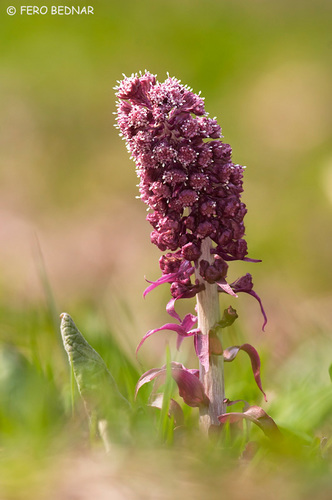
Common Butterbur
Petasites hybridus
A true herald of spring, Common Butterbur transforms muddy riverbanks into lush green sanctuaries with its massive, prehistoric-looking leaves and early pink blooms.
Quick Identification
Size
Flowering spikes 10–40 cm (4–16 in) tall; leaves 40–100 cm (16–39 in) in diameter
Colors
Pale pink to reddish-purple flower heads; large green heart-shaped leaves with greyish, downy undersides
Key Features
- Fleshy pink flower spikes appearing before leaves in early spring
- Massive, umbrella-like leaves reaching up to 1 meter wide
- Hollow, scale-covered flower stalks
- Found almost exclusively in very wet or muddy soil
When You’ll See Them
Geographic range
Where Does the Common Butterbur Live?
Common Butterbur is native to the temperate regions of Europe and Northern Asia, thriving in the cool, damp climates of the British Isles, Scandinavia, and central Europe. It stretches as far east as the Caucasus and parts of Russia, preferring lowland areas with consistent water access. While primarily a Palearctic species, it has been introduced to localized damp environments in North America, where it occasionally naturalizes near old garden sites.
Basemap © OpenStreetMap contributors
Behavior
Common Butterbur is a hardy perennial that is often the first sign of life in damp woodlands and riverbanks. It employs a unique growth strategy where its alien-looking flower spikes emerge from the muddy ground in late winter or early spring, long before its foliage appears. These flowers provide a vital early-season nectar source for bees and other pollinators waking up from hibernation.
As the flowers fade, the plant shifts its energy into growing enormous, heart-shaped leaves. These leaves grow so large and dense that they create a thick canopy, effectively shading out any competing vegetation on the forest floor. In historical times, these cool, moisture-retaining leaves were used to wrap slabs of butter to keep them from melting, which is how the plant earned its common name.
EverydayEarth exclusive
Camera Tips
Capturing the Common Butterbur requires a two-stage approach because the plant changes so dramatically. In early spring (March or April), set your camera at a low 'worm’s-eye' view, roughly 6 inches off the ground, to frame the emergence of the pink flower spikes. Using a macro lens or a close-focus setting is ideal here, as the texture of the scale-covered stalks is highly photogenic against the bare, muddy earth.
Because Butterbur is a magnet for early-season insects, this is a prime spot to capture wildlife activity when little else is blooming. Set your camera to a high-speed trigger or video mode to catch bees and hoverflies visiting the nectar-rich florets. Since these insects are often sluggish in the cool spring air, you can get remarkably detailed footage if your camera is stabilized on a small tripod or ground mount.
By mid-summer, the strategy must change to accommodate the massive leaves. Switch to a wide-angle lens to capture the 'jungle' effect created by the foliage. To get the best light, aim for early morning or late evening when the sun is low; backlighting the leaves will highlight the intricate vein patterns and the silvery, downy texture of their undersides. If you are using a trail camera, place it near a stream bank where the leaves are thickest to capture the movement of small mammals like water voles or amphibians seeking shade beneath the canopy.
Similar Species
Species that look similar or are commonly confused with Common Butterbur.
Frequently Asked Questions
Record Common Butterbur at your habitat
Connect a camera to start building your own species record — AI identifies every visitor automatically.