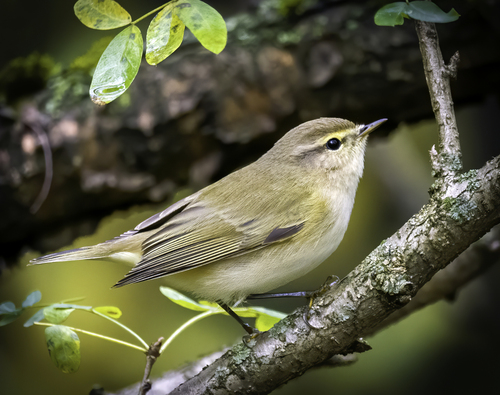
Common Chiffchaff
Phylloscopus collybita
The Common Chiffchaff is the ultimate harbinger of spring, recognizable by its rhythmic song and energetic tail-flicks. This tiny, olive-colored traveler is a favorite for backyard birders across Europe and Asia.
Quick Identification
Size
10-12 cm (4-4.7 in) in length; 15-21 cm (6-8 in) wingspan; 6-10 g (0.2-0.4 oz) in weight
Colors
Dull olive-green to brown upperparts, off-white underparts with a yellowish-buff wash on the breast and flanks. Features a faint pale eyebrow stripe and dark legs.
Key Features
- Frequent downward flicking or 'wagging' of the tail
- Very dark, almost blackish legs
- Fine, dark, needle-like bill
- Subtle pale ring around the eye
When You’ll See Them
Geographic range
Where Does the Common Chiffchaff Live?
The Common Chiffchaff is native to a vast region of the Palearctic, breeding across nearly all of Europe and eastward through Siberia. Its core range includes the United Kingdom, France, Germany, and Scandinavia, while it serves as a common passage migrant or winter visitor in the Mediterranean, North Africa, and parts of Southern Asia. While traditionally a migratory species, increasing numbers are now overwintering in Western Europe due to warming climates.
Basemap © OpenStreetMap contributors
Behavior
The Common Chiffchaff is a restless and highly active songbird, rarely remaining still for more than a few seconds. It is best known for its distinctive tail-wagging—a frequent downward flick that serves as a vital identification clue for birdwatchers. While it spends much of its time foraging in the canopy, it is surprisingly bold and will often descend to lower shrubbery or garden bird baths to drink and preen.
During the breeding season, males are highly territorial, singing their repetitive 'chiff-chaff' song from prominent perches to defend their space. They are generally solitary birds, though they may form loose mixed-species flocks with tits and other warblers during the autumn migration. Their interaction with humans is mostly passive; they are comfortable in suburban environments provided there are enough mature trees and insects to support them.
EverydayEarth exclusive
Camera Tips
To capture high-quality footage of a Common Chiffchaff, focus your camera on shallow water sources. These birds are small and move incredibly fast, so they are difficult to catch mid-air. A bird bath with a rough stone bottom or a very shallow garden pond edge is the perfect 'stage.' Position the camera at a low angle, about 1-2 feet from the water, to get eye-level shots that showcase their delicate facial markings and dark legs.
Because they are so small, traditional PIR motion sensors may struggle to trigger. If your camera has adjustable sensitivity, set it to the highest level. Using a 'burst' mode is essential; set your camera to take 3-5 photos per trigger. This increases your chances of catching the bird during its characteristic tail-flick or while it is momentarily still during a drink. If you are recording video, use a high frame rate (60fps) to help distinguish them from the very similar Willow Warbler in post-analysis.
Placement is key. Chiffchaffs love 'edge' habitats, so place your camera near dense shrubs like hawthorn or willow that sit adjacent to an open lawn. They feel safest when they have a quick escape route into thick foliage. Spring is the best time for captures, as the birds are lower in the vegetation and much more vocal, making them easier to track. Avoid using birdseed as bait, as they are insect-eaters; instead, planting native, insect-attracting plants will naturally draw them into your camera's field of view.
Similar Species
Species that look similar or are commonly confused with Common Chiffchaff.
Frequently Asked Questions
Record Common Chiffchaff at your habitat
Connect a camera to start building your own species record — AI identifies every visitor automatically.