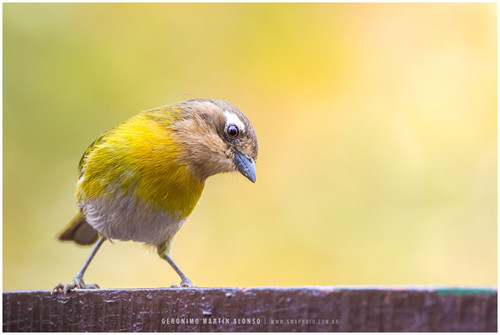
Common Chlorospingus
Chlorospingus flavopectus
A lively, social leader of the highland cloud forests, the Common Chlorospingus is easily recognized by its signature white eye-spot and bright yellow breast. Often seen in noisy, energetic groups, this bird is a staple of mountain ecosystems from Mexico to Argentina.
Quick Identification
Size
Length: 13–14 cm (5–5.5 inches); Weight: 15–22 g (0.5–0.8 oz)
Colors
Olive-green back and wings, white belly, and a distinctive yellowish-green band across the breast. The head usually features a dark crown and a prominent white spot behind the eye.
Key Features
- Distinctive white 'teardrop' or spot behind the eye
- Bright yellow-olive breast band contrasting with white throat and belly
- Small, thick-based bill typical of bush-tanagers
- Social behavior, almost always seen in active groups
When You’ll See Them
Geographic range
Where Does the Common Chlorospingus Live?
Native to the Western Hemisphere, the Common Chlorospingus is a highland specialist found along the mountainous spine of the Neotropics. Its core range begins in the central highlands of Mexico and extends through the mountains of Central America into the Andes of South America. It thrives across Colombia, Venezuela, and Ecuador, reaching as far south as Bolivia and northwest Argentina, though it is strictly limited to higher elevations and absent from the tropical lowlands.
Basemap © OpenStreetMap contributors
Behavior
The Common Chlorospingus is an exceptionally social bird, often serving as the core member or 'nuclear' species of mixed-species foraging flocks. They are rarely found alone, preferring to move in groups of 6 to 20 individuals. This high-energy species spends its day nervously hopping through the mid-story and undergrowth of montane forests, constantly chirping to maintain contact with its group.
In human-adjacent areas like highland coffee plantations or mountain gardens, they are relatively bold and inquisitive. They aren't easily spooked by stationary observers or cameras, provided there is enough cover nearby. Their flight is short and jerky, moving from branch to branch as they search for food among the foliage.
EverydayEarth exclusive
Camera Tips
To capture the Common Chlorospingus on camera, placement is everything. These birds are most active in the mid-canopy and understory, so mount your camera 4 to 6 feet off the ground, facing toward dense, berry-producing shrubs or forest edges. They are particularly attracted to native fruiting plants like Miconia; if you have these in your yard, aim your lens there during the early morning hours.
Because this species travels in fast-moving, social groups, use a camera with a fast trigger speed and set it to 'Burst Mode' or high-frequency photo intervals. A single bird entering the frame is usually a sign that ten more are right behind it. Capturing a sequence of photos will allow you to see the social dynamics of the flock as they move through the area.
Water is another powerful lure for this highland species. A shallow, elevated birdbath with a small dripper or solar fountain will entice them to descend from the canopy. Position the camera about 3-5 feet from the water source to catch them during their daily bathing and drinking rituals. Since they inhabit misty cloud forests, ensure your camera housing is well-protected against high humidity and frequent drizzle.
Frequently Asked Questions
Record Common Chlorospingus at your habitat
Connect a camera to start building your own species record — AI identifies every visitor automatically.