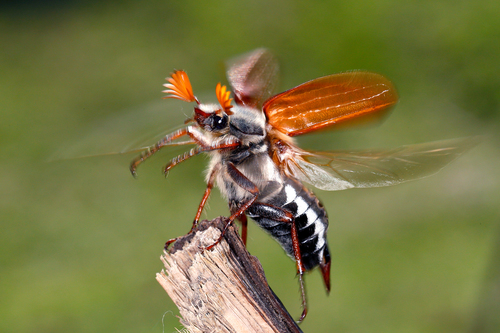
Common Cockchafer
Melolontha melolontha
Meet the 'Maybug,' a spectacular scarab beetle famous for its loud springtime buzz and impressive fan-like antennae. These clumsy giants of the insect world are a classic sign that spring has truly arrived in European gardens.
Quick Identification
Size
25 to 30 mm (1 to 1.2 inches) in length
Colors
Reddish-brown wing cases (elytra), black head and thorax, and distinctive white triangular markings along the sides of the abdomen
Key Features
- Large fan-shaped antennae with 6-7 lamellae
- Pointed, downward-curving pygidium (tail end)
- Hairy black thorax and reddish-brown ridged wing cases
When You’ll See Them
Geographic range
Where Does the Common Cockchafer Live?
Native to the European continent, the Common Cockchafer is widely distributed from the British Isles and France in the west, stretching across Central Europe into parts of Russia. While they are absent from the far north of Scandinavia and the southernmost parts of the Mediterranean, they are a staple of temperate European landscapes. These beetles are especially prevalent in regions with traditional agricultural mosaics and ancient deciduous forests.
Basemap © OpenStreetMap contributors
Behavior
The Common Cockchafer is most famous for its dramatic, buzzing flight during warm spring evenings, typically in May. These beetles spend the vast majority of their lives—usually three to four years—underground as larvae (known as white grubs). They emerge as adults for a brief but frantic period of several weeks to mate and feed, often seen swarming around the tops of trees at dusk.
During their adult phase, they are known for their somewhat clumsy flight patterns, often bumping into windows or outdoor lights, which has earned them nicknames like 'doodlebug' or 'maybeetle.' While they were once considered a major agricultural pest, their populations are now managed, and they are generally seen as a sign of a healthy ecosystem. They are completely harmless to humans and do not bite or sting.
EverydayEarth exclusive
Camera Tips
Capturing the Common Cockchafer on camera requires focusing on their brief window of activity in late spring, specifically during the 'May' emergence. To get the best shots, position your camera near deciduous host trees like oak, beech, or fruit trees where adults congregate to feed. Since these beetles are highly attracted to artificial light, setting up a camera near a porch light or using a low-intensity UV light lure within the camera's field of view will almost certainly draw them in for a close-up.
Because cockchafers are relatively small compared to mammals, you'll want to use a camera with a good macro or close-focus capability. If your camera is a standard trail cam, mount it about 1 to 1.5 meters off the ground, angled slightly upward toward the tree canopy or at a nearby white wall where they might land to rest. Ensure your trigger speed is set to the fastest possible setting, as their flight is fast and erratic.
The 'blue hour'—just after sunset—is the magic time for Common Cockchafer activity. Configure your camera to record short video clips (10-15 seconds) rather than just stills; this captures their unique buzzing flight and the way they use their fan-like antennae to sense the air. If you are placing a camera in your garden, look for areas with disturbed soil or lawn edges where they may be emerging from their multi-year subterranean sleep.
Similar Species
Species that look similar or are commonly confused with Common Cockchafer.
Frequently Asked Questions
Record Common Cockchafer at your habitat
Connect a camera to start building your own species record — AI identifies every visitor automatically.