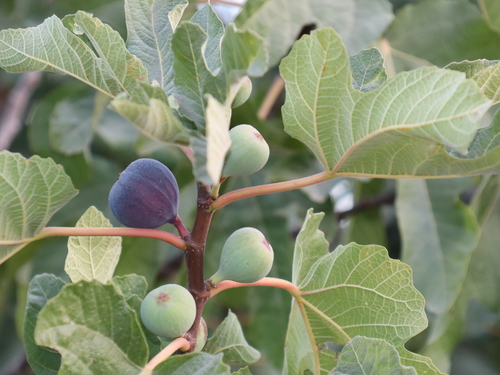
common fig
Ficus carica
An ancient symbol of abundance, the common fig is a structural masterpiece that serves as a high-energy buffet for backyard wildlife. Its sculptural silver bark and iconic lobed leaves make it a favorite for gardeners and nature observers alike.
Quick Identification
Size
Typically 3–10 metres (10–33 feet) tall with a similar or wider crown spread.
Colors
Smooth silver-gray bark; dark green, leathery leaves; fruit transitions from green to deep purple, bronze, or yellowish-green.
Key Features
- Large, deeply lobed leaves with 3-5 distinct sections
- Smooth, pale gray bark that becomes slightly fissured with age
- Pear-shaped fruit (syconium) containing hundreds of tiny flowers inside
- Milky white latex sap visible when leaves or stems are broken
When You’ll See Them
Geographic range
Where Does the common fig Live?
Where Does the Common Fig Live? The common fig is native to the Mediterranean region and Southwest Asia, stretching from Turkey and Greece across to Afghanistan and northern India. Due to its historical importance as a food crop, it has been introduced and naturalized throughout the world, thriving in Mediterranean-style climates like California, parts of Australia, South Africa, and South America. It is a hardy survivor, frequently found escaping cultivation in the Southern United States and Mexico, where it establishes itself in rocky crevices or along suburban forest edges.
Basemap © OpenStreetMap contributors
Behavior
The common fig is a deciduous tree known for its unique relationship with its environment. Unlike most flowering plants, its blossoms are hidden inside the fruit-like syconium, requiring a specialized symbiotic relationship with the fig wasp for pollination. In a backyard setting, the tree acts as a seasonal anchor, transitioning from a dormant state of bare, sculptural silver branches in winter to a lush, broad-leaved canopy in the summer months.
As the fruit ripens, the tree becomes a frantic hub of social activity for local wildlife. While the tree itself is stationary, its 'behavior' is defined by its high productivity and the way it interacts with visitors. It is a resilient species, often growing in cracks in stone walls or rocky outcrops, showing an aggressive root system and a remarkable ability to seek out water in arid conditions.
EverydayEarth exclusive
Camera Tips
Capturing the common fig on camera is less about the tree moving and more about the incredible wildlife theater it hosts. To see the tree's life cycle, set your camera to a time-lapse mode during the late spring and summer. Position the camera on a sturdy tripod or a nearby fence post, focusing on a specific branch with developing fruit. Seeing a fig swell and change color over the course of two weeks makes for a captivating sequence.
If you are using a motion-activated AI camera to spot visitors, the common fig is your best 'natural bait.' Aim your camera at a cluster of ripening figs from a distance of about 3 to 5 feet. You’ll want to angle the camera slightly downward to capture ground-dwelling foragers like raccoons or opossums that scavenge fallen fruit, while keeping the lower branches in the frame for birds. In the early morning, you will likely capture scrub jays, waxwings, and squirrels competing for the ripest fruit.
Be mindful of the 'fig leaf effect.' Because fig leaves are large and broad, they catch the wind easily. This can cause frequent 'false triggers' on PIR (Passive Infrared) sensors. To avoid this, prune away any large leaves that are directly in front of the camera lens or increase the sensitivity threshold on your device. High-contrast sunlight through the canopy can also blow out your images; if possible, position the camera facing North or South to ensure even lighting on the fruit throughout the day.
Similar Species
Species that look similar or are commonly confused with common fig.
Frequently Asked Questions
Record common fig at your habitat
Connect a camera to start building your own species record — AI identifies every visitor automatically.