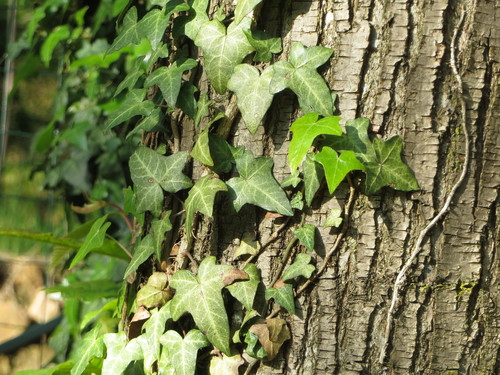
common ivy
Hedera helix
The ultimate architectural climber of the backyard, Common Ivy is a year-round sanctuary for everything from hibernating butterflies to hungry winter birds.
Quick Identification
Size
Climbing up to 20-30 meters (65-100 feet) in height; individual leaves typically 5-10 cm (2-4 inches) long.
Colors
Deep glossy green leaves with lighter, prominent veins; berries are dark purple-black; flowers are yellowish-green.
Key Features
- Clinging aerial rootlets that allow it to scale vertical surfaces
- Distinctive five-lobed juvenile leaves vs. heart-shaped adult leaves
- Evergreen foliage that provides year-round cover
- Clusters of globose dark berries produced in late winter
When You’ll See Them
Geographic range
Where Does the common ivy Live?
Common ivy is native to a broad expanse across Europe, ranging from southern Scandinavia down to the Mediterranean and into parts of North Africa and Western Asia, including Turkey and Iran. Because of its popularity as an ornamental groundcover, it has been naturalized across much of North America, Australia, and New Zealand. While appreciated in its native range for supporting biodiversity, it is often managed as an invasive species in regions like the Pacific Northwest of the United States.
Basemap © OpenStreetMap contributors
Behavior
Common Ivy is a versatile evergreen climber that plays a vital role in local ecosystems. It exhibits two distinct growth phases: the juvenile stage and the adult stage. In its juvenile form, it uses specialized aerial rootlets to cling to tree bark, stone, and brick, spreading rapidly across the ground or up structures. Once the plant reaches a height where it receives sufficient sunlight, it transitions to the adult stage, developing thicker, unlobed leaves and woody branches that no longer climb but instead produce flowers and fruit.
Unlike many beliefs, ivy is not a parasite and does not sap nutrients from the trees it climbs; it merely uses them for structural support. In a backyard setting, ivy serves as a 'wildlife hotel,' providing essential nesting sites for birds and hibernation spots for insects. Its late-flowering cycle in autumn makes it one of the most important nectar sources for pollinators when most other plants have gone dormant.
EverydayEarth exclusive
Camera Tips
To capture the wildlife associated with common ivy, position your AI-powered camera near a 'mature' patch—look for the sections with unlobed, heart-shaped leaves, as these are the ones that will produce flowers and berries. Mount your camera at a height of 5 to 8 feet, angling it slightly downward toward the fruit clusters. This is the prime spot for catching birds like blackbirds, thrushes, and woodpigeons during the lean winter months when ivy berries are one of the few high-fat foods available.
During the autumn, ivy flowers are a magnet for late-season insects. Set your camera to a 'macro' or close-focus setting if possible, or ensure it is positioned about 3 to 5 feet from the blooms. You are likely to capture the specialized Ivy Bee (Colletes hederae), hoverflies, and even late-emerging butterflies like the Red Admiral. Because the leaves are glossy, avoid using high-intensity direct flash at night to prevent 'white-out' on your photos; instead, rely on ambient light or low-glow infrared settings.
Ivy is also a preferred roosting and nesting site for small birds like Wrens and Robins. If you suspect a bird is sleeping within a dense ivy wall, set your camera to its most sensitive motion-trigger setting with a short video duration. This can capture the charming 'tucking in' behavior as birds settle into the thick foliage at dusk. In the spring, keep a respectful distance but watch for activity that indicates a nest is being built deep within the vines.
Similar Species
Species that look similar or are commonly confused with common ivy.
Frequently Asked Questions
Record common ivy at your habitat
Connect a camera to start building your own species record — AI identifies every visitor automatically.