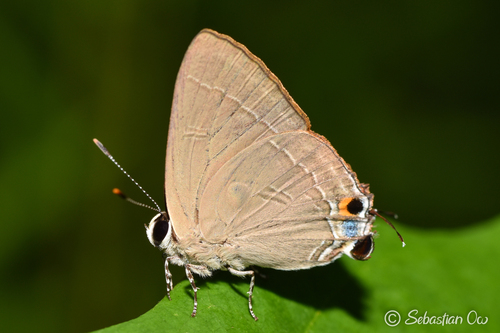
Common Red Flash
Rapala iarbus
A metallic jewel of the Asian tropics, the Common Red Flash earns its name with every sun-drenched flight. This agile butterfly is a master of the garden, blending incredible speed with a stunning coppery-red shimmer.
Quick Identification
Size
Wingspan of 33-41 mm (1.3-1.6 inches)
Colors
Males feature a brilliant coppery-red upperside with dark borders; females are duller brownish-copper. Both sexes have brownish-grey undersides with a distinct white-edged transverse line.
Key Features
- Brilliant coppery-red upperside (males)
- Distinctive 'tails' on the hindwings with a nearby black eyespot
- White-edged dark band on the underside of both wings
- Fast, erratic 'flashing' flight pattern
- White-tipped clubbed antennae
When You’ll See Them
Geographic range
Where Does the Common Red Flash Live?
Native to the Indo-Malayan realm, the Common Red Flash is a widespread beauty found throughout South and Southeast Asia. Its core range extends from the fertile plains of India and the teardrop island of Sri Lanka through the tropical forests of Thailand, Myanmar, and Malaysia, reaching as far as the Indonesian archipelago and the Philippines. It is a highly adaptable species, comfortably making its home in both pristine wilderness and the bustling greenery of suburban neighborhoods across the tropics.
Basemap © OpenStreetMap contributors
Behavior
The Common Red Flash is a high-energy butterfly known for its rapid, darting flight. Males are particularly territorial, often selecting a prominent sunlit leaf as a 'lookout' post. From here, they will aggressively chase away other butterflies, their metallic wings creating a distinctive red flash as they take flight—a behavior that gives the species its common name.
These butterflies are most active during the warmest parts of the day. While they are frequent nectar feeders, they are also commonly seen participating in 'puddling' behavior, where they congregate on damp soil or sand to mineralize. Unlike some more timid species, the Common Red Flash is relatively comfortable in human-altered landscapes, provided there are sufficient host plants and flowering shrubs.
EverydayEarth exclusive
Camera Tips
To capture the Common Red Flash on a backyard camera, placement is everything. These butterflies are attracted to specific nectar-rich flowers like Lantana, Ixora, and Hibiscus. Position your camera within 12-18 inches of these blooms, ensuring you use a macro lens or a camera with a short focal distance to capture the intricate details of their 'tails' and wing patterns.
Because they are 'flash' fliers, standard motion-activated trail cameras may be too slow. Use a camera with a high-speed trigger or set your device to record high-frame-rate video (60fps or higher). This allows you to pull high-quality stills from the video when the butterfly momentarily perches to feed. Aim for sun-drenched spots, as these butterflies rarely visit flowers in deep shade.
Another expert tip is to create a 'puddling station' in view of the camera. Mix a bit of sea salt or compost into a patch of damp sand. The Common Red Flash, especially the males, will often land here to drink, providing a much more stable and predictable subject for your AI-powered camera to identify and photograph than when they are darting between flowers.
Similar Species
Species that look similar or are commonly confused with Common Red Flash.
Frequently Asked Questions
Record Common Red Flash at your habitat
Connect a camera to start building your own species record — AI identifies every visitor automatically.