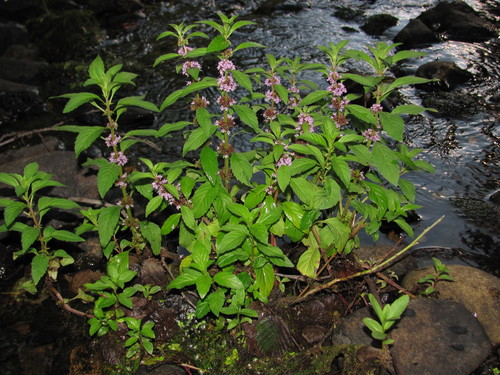
corn mint
Mentha arvensis
A fragrant powerhouse of the damp wild, Corn Mint is easily identified by its tiered purple blooms and a refreshing menthol scent that fills the air when stepped upon.
Quick Identification
Size
Stands 10–60 cm (4–24 inches) tall with a spread that can reach up to 1 metre (3 feet) through rhizomes.
Colors
Bright to dark green leaves, occasionally with reddish-purple stems; flowers are pale purple, lilac, or occasionally white.
Key Features
- Distinctive square stems covered in fine hairs
- Flowers arranged in crowded whorls at the leaf axils
- Opposite, ovate leaves with serrated edges
- Powerful menthol scent when leaves are crushed
When You’ll See Them
Geographic range
Where Does the corn mint Live?
Native to the temperate regions of the Northern Hemisphere, corn mint boasts a massive circumboreal distribution. It is found across nearly the entire European continent, stretching eastward through Siberia and the Himalayas into Central Asia. In North America, it is widely distributed from Alaska and Canada down through the majority of the United States, where it thrives in damp, disturbed soils. While it is primarily a native resident in these areas, its hardiness has allowed it to naturalize in various temperate pockets worldwide where moisture is abundant.
Basemap © OpenStreetMap contributors
Behavior
Corn mint is a resilient perennial that primarily spreads through a network of creeping underground stems called rhizomes. Unlike many other plants that bloom at the tip of the stem, corn mint produces its flowers in the 'axils' (the junction where the leaf meets the stem), creating a unique tiered appearance. It is a vital component of the local ecosystem, acting as a high-value nectar source for a diverse array of insects.
In a backyard setting, corn mint is highly social in an ecological sense, often forming dense patches that provide cover for small ground-dwelling insects and amphibians. While it can be expansive, it is generally less invasive than some cultivated garden mints. It interacts with humans mostly through its aromatic properties; it has a long history of use in herbal teas and traditional medicines due to its high menthol content.
EverydayEarth exclusive
Camera Tips
To capture the true essence of corn mint, position your AI-powered camera at a low angle, roughly 20-30 cm from the ground. This 'worm's-eye view' highlights the unique tiered flower whorls that climb the stem. Because corn mint is a magnet for pollinators, use a camera with a fast shutter speed or a dedicated 'insect' mode to capture the hoverflies, bees, and butterflies that frequent the blossoms during the heat of the day.
If your camera supports time-lapse photography, corn mint is a fantastic subject. Set the camera to take a frame every 30 minutes over a week in mid-summer to watch the flowers unfurl sequentially up the stem. For the best lighting, aim for the 'golden hour' shortly after sunrise or before sunset; the fine hairs on the square stems catch the light beautifully, creating a glowing 'halo' effect that makes for stunning identification photos.
Since corn mint stays stationary, focus on its interactions. Place your camera near a patch that receives morning sun, as this is when the plant's essential oils are most potent and insect activity begins. If you are using a trail camera to spot herbivores, keep in mind that many mammals avoid the strong scent, but you may catch rabbits or deer investigating the surrounding vegetation. Ensure the lens is clean, as the moist environments where mint grows can often lead to lens fogging.
Similar Species
Species that look similar or are commonly confused with corn mint.
Frequently Asked Questions
Record corn mint at your habitat
Connect a camera to start building your own species record — AI identifies every visitor automatically.