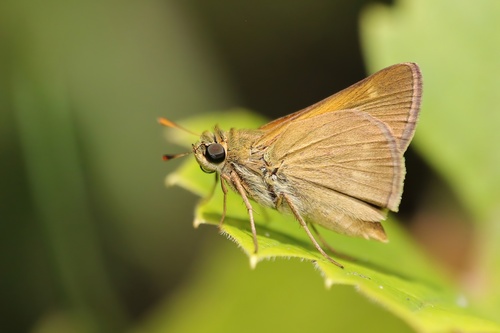
Crossline Skipper
Limochores origenes
A master of the 'skip and zip' flight, the Crossline Skipper is a subtle yet fascinating visitor to summer meadows. While small and unassuming, its rapid-fire movements and precise territorial behavior make it a rewarding challenge for backyard wildlife observers.
Quick Identification
Size
Wingspan of 25–36 mm (1.0–1.4 inches); body length approximately 12–19 mm (0.5–0.75 inches)
Colors
Dull olive-brown to tawny-gold; males feature a long, very slender black scent patch (stigma) on the forewing; females are darker with two small transparent spots.
Key Features
- Slender, slightly curved black stigma on male forewings
- Underside of hindwing is a uniform tawny or olive-brown with a very faint, pale postmedian band
- Pointed forewings and a robust, moth-like body
- Erratic, rapid 'skipping' flight pattern
When You’ll See Them
Geographic range
Where Does the Crossline Skipper Live?
Native to the North American continent, the Crossline Skipper is primarily found throughout the eastern half of the United States and southern regions of eastern Canada. Its range extends from southern Ontario and Quebec down to Florida, stretching as far west as the edge of the Great Plains in states like North Dakota and Texas. It is a common fixture in temperate meadows and suburban landscapes where native host grasses have been preserved.
Basemap © OpenStreetMap contributors
Behavior
The Crossline Skipper is a quintessential representative of the 'grass skippers,' known for its rapid and powerful flight. Unlike many larger butterflies that glide, this species moves with a series of quick, darting motions that can make it difficult to track with the naked eye. They are strictly diurnal and are most active during the warmest, brightest parts of the day when they can be found nectaring on a variety of summer wildflowers.
Males are notably territorial, often choosing a prominent perch on a tall blade of grass or a flower head to survey their surroundings. From these vantage points, they will dart out to investigate any passing insect, looking for potential mates or chasing away rival males. They are generally solitary, though several individuals may congregate in a particularly nectar-rich patch of clover or vetch.
EverydayEarth exclusive
Camera Tips
Capturing the Crossline Skipper requires a specialized approach because of its small size and extreme speed. To succeed with an AI-powered backyard camera, you should focus your lens on 'landing zones' rather than trying to track them in flight. Identify a cluster of nectar-rich flowers like Purple Coneflower or Bee Balm and position your camera on a tripod or mount just 12 to 18 inches away. A macro lens or a camera with a short minimum focal distance is essential for seeing the fine details of the wing markings and the male's slender stigma.
Because these insects are triggered by heat and motion, standard trail cameras may struggle with the 'lag time' between detection and capture. Use a camera with a high frame rate (at least 60fps) or a pre-trigger buffer to ensure you don't just catch a blur as they zip away. Since they are most active in full sun, avoid placing cameras where harsh shadows will fall across your flower target, as the high contrast can wash out the subtle tawny-brown colors of the skipper's wings.
For the best results, time your camera sessions for mid-summer during the peak of the afternoon heat. If you want to encourage them to stay in frame longer, planting their favorite nectar sources in a high-density 'target' patch will keep them nectaring in one spot. Ensure the background behind the flowers is relatively clean or out of focus so the AI detection software can easily distinguish the skipper's small brown body from the surrounding vegetation.
Similar Species
Species that look similar or are commonly confused with Crossline Skipper.
Frequently Asked Questions
Record Crossline Skipper at your habitat
Connect a camera to start building your own species record — AI identifies every visitor automatically.