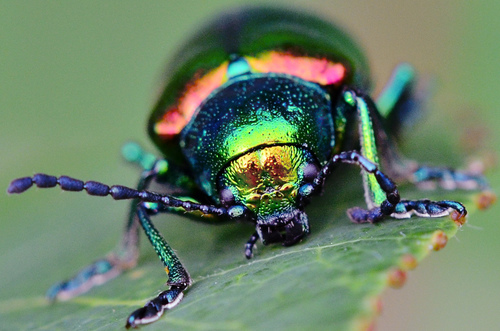
Dogbane Leaf Beetle
Chrysochus auratus
Meet the Dogbane Leaf Beetle, a shimmering 'living jewel' of the insect world. With its iridescent metallic shell and fascinating toxic defenses, this beetle is a highlight of any summer meadow.
Quick Identification
Size
8 to 11 mm (0.3 to 0.4 inches) in length
Colors
Brilliant iridescent blue-green with strong metallic copper, gold, or crimson highlights depending on the light angle; no distinct color difference between males and females.
Key Features
- Shiny, metallic exoskeleton with iridescent 'living jewel' appearance
- Oblong and convex body shape
- Short, thick antennae with distinct segments
- Typically found specifically on Dogbane or Milkweed plants
When You’ll See Them
Geographic range
Where Does the Dogbane Leaf Beetle Live?
The Dogbane Leaf Beetle is a native resident of North America, boasting a wide distribution that spans much of the continent. It is most commonly encountered throughout the eastern United States and southern Canada, stretching from the Atlantic coast westward to the Rocky Mountains. While its heartland lies in the temperate deciduous forest biomes and tallgrass prairies of the Midwest and East, localized populations can be found wherever its specific host plants thrive. Its presence is a fantastic indicator of a healthy, native meadow ecosystem.
Basemap © OpenStreetMap contributors
Behavior
The Dogbane Leaf Beetle is one of nature's most stunning 'living jewels.' These beetles are strictly diurnal, meaning they are active during the day, particularly when the sun is at its brightest. Their most fascinating behavior is their relationship with their host plant, Spreading Dogbane (Apocynum androsaemifolium). The beetle consumes the plant's toxic milky sap, which contains cardiac glycosides. Instead of being harmed, the beetle sequesters these toxins within its own body, making it foul-tasting and poisonous to potential predators like birds.
These beetles are often found in small clusters on the leaves of their host plants. During the summer months, they spend much of their time feeding, seeking mates, and basking in the sun to regulate their temperature. When threatened, they often perform a 'drop-and-roll' maneuver, tucking their legs and falling into the dense vegetation below to disappear from a predator's view.
EverydayEarth exclusive
Camera Tips
Capturing the Dogbane Leaf Beetle on a backyard camera requires a different approach than filming mammals or birds. Because of their small size, a standard trail camera may struggle to focus. For the best results, use a camera with macro capabilities or a dedicated 'work-in-progress' AI camera designed for insect observation. Position your camera just 6 to 10 inches away from a cluster of Dogbane or Milkweed leaves. Since these beetles stay on their host plants for long periods, you don't need a fast trigger speed, but you do need a high-resolution setting to capture the iridescence.
Lighting is the most critical factor for this species. Their 'color' is actually structural, created by microscopic plates that reflect light. To get those stunning rainbows of gold and crimson, place your camera in a spot that receives direct but dappled sunlight. Mid-day sun provides the best intensity for the metallic sheen, but early morning light can capture the beetles while they are still sluggish from the night's cool temperatures, making them easier to film.
If you are using a trigger-based camera, set it to 'Time Lapse' mode rather than 'Motion' mode. These beetles move slowly and might not trip a traditional PIR sensor. A photo every 5-10 minutes during the peak heat of the day will likely result in a gallery of beautiful shots. Make sure to clear away any tall grass that might blow in the wind and cause false triggers or block the view of the beetle’s favorite leaf.
Similar Species
Species that look similar or are commonly confused with Dogbane Leaf Beetle.
Frequently Asked Questions
Record Dogbane Leaf Beetle at your habitat
Connect a camera to start building your own species record — AI identifies every visitor automatically.