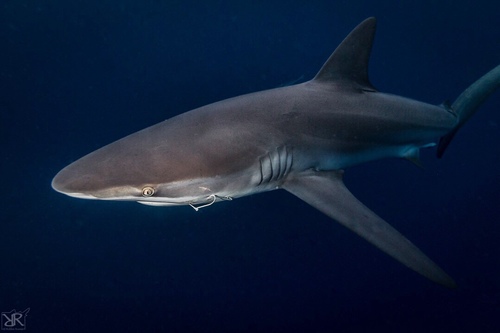
Dusky Shark
Carcharhinus obscurus
A sleek, long-distance traveler of the deep, the Dusky Shark is a symbol of the ocean's wild frontier. This powerful apex predator roams the world's continental shelves, performing some of the longest migrations in the shark world.
Quick Identification
Size
Typically 3 to 3.7 metres (10 to 12 feet), reaching a maximum of 4.2 metres (14 feet); weight ranges from 160 to 350 kilograms (350 to 770 pounds).
Colors
Bronzy to bluish-grey on the upper body with a clean white underside; fins often have dusky tips that fade with age.
Key Features
- Raised interdorsal ridge between the two dorsal fins
- Long, sickle-shaped pectoral fins with pointed tips
- Short, broadly rounded snout with a mouth width greater than its length
When You’ll See Them
Geographic range
Where Does the Dusky Shark Live?
Native to tropical and warm-temperate waters globally, the Dusky Shark maintains a massive range across every major ocean. In the Western Atlantic, they are found from Massachusetts down to southern Brazil, while in the Pacific, they range from southern California to Chile, as well as around Australia and East Asia. This wide-ranging species is most commonly encountered along continental margins where nutrient-rich currents support large populations of prey fish.
Basemap © OpenStreetMap contributors
Behavior
The Dusky Shark is a highly mobile apex predator known for its impressive endurance and long-distance migrations. These sharks are among the most well-traveled of the requiem shark family, often migrating thousands of miles to stay within their preferred temperature range. They generally move toward the poles during the summer months to follow warming waters and return toward the equator as winter approaches. While adults are often solitary wanderers, younger sharks frequently congregate in large, loosely organized nurseries in shallow coastal waters.
In terms of interaction, Dusky Sharks are generally wary and cautious around humans. They do not possess the aggressive reputation of their cousins, the Bull or Tiger sharks, but their massive size and powerful build demand respect. They are slow-growing and late-maturing, which makes them particularly sensitive to environmental changes and overfishing. In the marine ecosystem, they serve as a critical check on mid-level predator populations, ensuring a balanced food web across the continental shelves.
EverydayEarth exclusive
Camera Tips
To capture a Dusky Shark on camera, you'll need to move beyond the traditional backyard setup and into the marine environment using a Baited Remote Underwater Video (BRUV) system. Because these sharks are wide-ranging and often stay away from noisy boat engines or scuba bubbles, a stationary, remote camera is the most effective tool. Use a waterproof housing rated for at least 40 meters and mount it to a heavy, corrosion-resistant frame. A 'bait arm' extending about a meter in front of the lens is essential; use oily fish like sardines or mackerel to create a scent trail that draws the shark into the camera's field of view.
Placement is key for these 'blue water' predators. Focus on the 'highways' of the ocean: the edges of the continental shelf, submerged sea mounts, or deep-water reef drop-offs. Dusky Sharks are known to follow current lines, so look for areas where upwellings occur. Unlike shallow-water reef sharks, the Dusky Shark may take longer to find your bait, so plan for long deployments of 2-4 hours to allow the scent to travel. If you are near a coastal area with a steep drop-off, you can deploy your rig from a pier or boat using a sturdy retrieval line.
For the best visual results, set your camera to a high frame rate (60fps or higher) to capture their sleek, undulating swimming motion in smooth slow-motion later. Use a wide-angle lens to ensure you catch the full 12-foot length of the animal when it passes the bait. Since water absorbs red light, a magenta or red filter is recommended for depths over 5 meters to restore natural color balance. High-capacity SD cards and external battery packs are vital, as you’ll want to record continuously to catch the often brief but spectacular visit of this nomadic apex predator.
Similar Species
Species that look similar or are commonly confused with Dusky Shark.
Frequently Asked Questions
Record Dusky Shark at your habitat
Connect a camera to start building your own species record — AI identifies every visitor automatically.