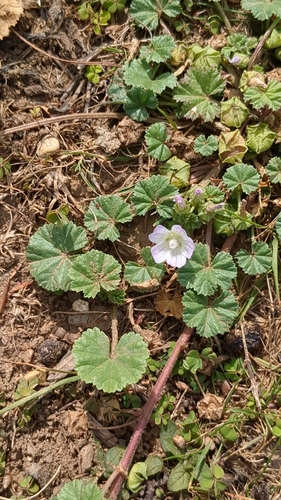
dwarf mallow
Malva neglecta
A humble yet resilient backyard staple, the dwarf mallow is a master of survival. Famous for its edible 'cheesewheel' seeds and delicate pale blossoms, it turns even the most neglected patch of soil into a miniature ecosystem.
Quick Identification
Size
Height: 10–60 cm (4–24 in); Spread: up to 1 m (3 ft)
Colors
Bright green foliage; flowers are white to pale lilac with subtle lavender veins
Key Features
- Round or heart-shaped leaves with 5-7 shallow lobes and crinkled edges
- Flowers with five deeply notched petals that are shorter than or equal to the sepals
- Distinctive fruit called a 'schizocarp' that resembles a tiny, segmented wheel of cheese
- Prostrate or decumbent growth habit, spreading along the ground
When You’ll See Them
Geographic range
Where Does the dwarf mallow Live?
Native to the broad temperate regions of Europe, North Africa, and Western Asia, the dwarf mallow has successfully traveled across the globe. Today, it is a ubiquitous resident of the United Kingdom, much of mainland Europe, and Central Asia. In North America, it has become naturalized from coast to coast, thriving in every province of Canada and nearly every state in the US. It is also commonly found in parts of Australia and South America, where it was introduced through early agricultural trade.
Basemap © OpenStreetMap contributors
Behavior
The dwarf mallow is a resilient annual or biennial plant that is often the first to colonize disturbed ground. Unlike many taller garden plants, it prefers to spread horizontally, creating a low-lying mat of greenery that can withstand heavy foot traffic and frequent mowing. It follows a solar rhythm, with its leaves subtly tracking the sun to maximize photosynthesis throughout the day.
Its most fascinating 'behavior' is the production of its unique seeds. As the flowers fade, they develop into small, round pods that look remarkably like miniature wheels of cheese. This plant serves as an important host for various butterfly larvae, including the Painted Lady, and provides a reliable nectar source for small native bees and honeybees throughout the summer months.
EverydayEarth exclusive
Camera Tips
Capturing the dwarf mallow requires getting low to the ground. Because of its prostrate growth habit, you should mount your camera just a few inches above the soil surface using a ground spike or a weighted beanbag. Position the lens at a slight upward angle to capture the delicate lavender veins on the white petals against the backdrop of the sky or taller garden plants.
Use a macro lens or a camera with a high-resolution sensor to document the development of the 'cheesewheel' seeds. These unique structures are often hidden under the large, umbrella-like leaves, so you may need to gently prop up a leaf or clear some surrounding grass to get a clear line of sight. Setting your camera to take a burst of photos every 15 minutes can create a stunning time-lapse of the flowers opening in the morning sun and closing as the light fades.
For those interested in garden visitors, this plant is a pollinator magnet. Set your camera’s trigger speed to its fastest setting and focus on a cluster of open blooms. You are likely to capture high-quality images of various bees and butterflies. Because the flowers are relatively small, a diffused flash can help illuminate the intricate details of the stamens and petals without creating harsh shadows.
Similar Species
Species that look similar or are commonly confused with dwarf mallow.
Frequently Asked Questions
Record dwarf mallow at your habitat
Connect a camera to start building your own species record — AI identifies every visitor automatically.