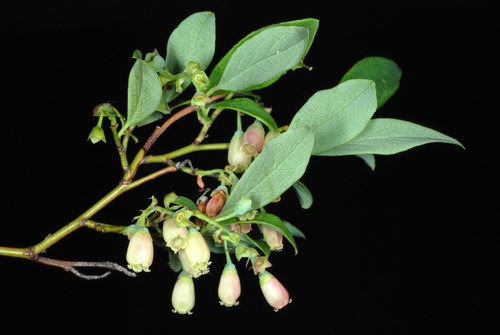
Early Lowbush Blueberry
Vaccinium pallidum
A sweet treasure of the Eastern forests, the Early Lowbush Blueberry offers delicate spring blooms and a summer feast for backyard birds and mammals alike.
Quick Identification
Size
A low-growing shrub typically reaching 15–90 cm (6–35 inches) in height with a similar spread.
Colors
Greenish-yellow to reddish stems; bell-shaped white, pink, or greenish blossoms; dark blue to black berries often with a waxy white coating.
Key Features
- Clusters of nodding, bell-shaped flowers
- Yellowish-green stems that often turn reddish in winter
- Small, oval leaves that are glaucous (waxy) on the underside
- Spreading growth habit forming low-lying colonies
- Sweet, dark blue fruit with a dusty 'bloom'
When You’ll See Them
Geographic range
Where Does the Early Lowbush Blueberry Live?
Native to the North American continent, the Early Lowbush Blueberry is widely distributed across the central and eastern United States and parts of central Canada. Its core range follows the spine of the Appalachian Mountains from Georgia up into New England, extending westward through the Ozarks to the edge of the Great Plains. It is a quintessential component of the Eastern Deciduous Forest, frequently found under the canopy of oak and hickory trees where sunlight reaches the forest floor.
Basemap © OpenStreetMap contributors
Behavior
The Early Lowbush Blueberry is a hardy, colonial shrub that plays a vital role in its ecosystem as a primary food producer. Unlike many plants that grow as isolated individuals, this species spreads via underground rhizomes to form extensive mats or 'patches' that can cover significant portions of the forest floor. In early spring, it becomes a focal point for native pollinators, specifically bumblebees and mason bees, which use 'buzz pollination' to release pollen from the plant's unique tube-like anthers.
As the season progresses, the plant transitions from a nectar source to a fruit provider. The berries ripen unevenly over several weeks, a strategy that ensures a steady food supply for wildlife rather than a single, overwhelming flush. This 'behavior' encourages a wide variety of birds and mammals to revisit the site frequently, aiding in the dispersal of seeds across the landscape through their droppings.
EverydayEarth exclusive
Camera Tips
Capturing the activity around an Early Lowbush Blueberry patch requires a low-profile approach. Set your trail camera on a short stake or mount it to a nearby tree at a height of about 12 to 18 inches. Angle the lens slightly downward to focus on the berry clusters. This setup is ideal for documenting the 'harvest'—you’ll catch songbirds like Blue Jays and Eastern Towhees, as well as small mammals like chipmunks and squirrels that frequently visit the bush for a sweet snack.
For the best results during the summer ripening phase, use 'Burst Mode' or high-speed triggers. Many birds are 'snatch-and-grab' foragers; they land for only a fraction of a second to pluck a berry. A standard trigger might only catch a blur of wings, but a 3-shot burst increases your chances of getting a clear image of the bird in mid-bite. If your camera features a time-lapse setting, consider using it during the late spring to capture the fascinating transition from delicate bell-shaped blossoms to fully formed fruit.
Pay close attention to the lighting. Because these bushes often grow in dappled shade, harsh midday sun can cause 'blown-out' highlights on the shiny leaves. Position your camera facing North or South to avoid direct lens flare. If you are using an AI-powered camera that triggers on movement, clear away any tall grasses directly in front of the lens that might blow in the wind, but leave the blueberry branches themselves intact to ensure the wildlife feels comfortable approaching the food source.
Similar Species
Species that look similar or are commonly confused with Early Lowbush Blueberry.
Frequently Asked Questions
Record Early Lowbush Blueberry at your habitat
Connect a camera to start building your own species record — AI identifies every visitor automatically.