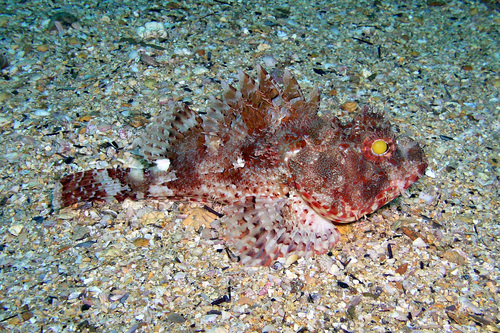
Eastern Red Scorpionfish
Scorpaena jacksoniensis
A master of disguise lurking in the shadows of the reef, the Eastern Red Scorpionfish is a vibrant yet elusive predator. Known for its venomous spines and stunning red camouflage, it is a fascinating find for coastal observers in Australia and New Zealand.
Quick Identification
Size
Typically grows to 25–40 cm (10–16 inches) in length and can weigh up to 1.5 kg (3.3 lbs).
Colors
Highly variable mottled patterns of bright red, orange, and rusty brown, often with darker blotches and white spots to mimic sponges and reef growth.
Key Features
- Large, bony head covered in spines and ridges
- Fleshy 'tassels' or skin flaps above the eyes and around the mouth
- Venomous dorsal spines capable of inflicting a painful sting
- Wide, fan-like pectoral fins with mottled patterns
When You’ll See Them
Geographic range
Where Does the Eastern Red Scorpionfish Live?
The Eastern Red Scorpionfish is native to the southwestern Pacific Ocean, centered along the temperate and subtropical coasts of Oceania. It is most frequently encountered along the eastern seaboard of Australia, stretching from southern Queensland down to the eastern reaches of South Australia. It is also found in the coastal waters surrounding New Zealand, where it inhabits both shallow shorelines and deeper offshore reefs.
Basemap © OpenStreetMap contributors
Behavior
The Eastern Red Scorpionfish is a master of camouflage and a patient ambush predator. It spends the vast majority of its time perfectly still on rocky reefs or hidden among seaweeds and sponges, waiting for unsuspecting prey to swim within striking distance. Because of its incredible ability to blend into the background, it is often overlooked by divers and snorkelers, though it is quite common in its range.
While they appear sluggish, these fish are capable of lightning-fast strikes. When prey approaches, the scorpionfish opens its massive mouth, creating a vacuum that sucks the victim in whole within milliseconds. Despite their venomous spines, which are used strictly for defense against predators like sharks or larger fish, they are not aggressive toward humans. However, their tendency to remain motionless means that most human injuries occur when an oblivious swimmer or wader accidentally steps on one.
EverydayEarth exclusive
Camera Tips
Capturing the Eastern Red Scorpionfish requires a specialized underwater setup, such as a waterproof action camera or a submersible trail camera. For the best results, mount your camera on a weighted tripod or a low-profile plate and place it on the seafloor near rocky crevices or at the base of pier pylons. These fish are highly sedentary, so a 'set and forget' approach works best; once they settle into a spot, they may not move for hours.
To attract this species to your camera's field of view, use a perforated bait container filled with crushed prawns or oily fish like sardines. The scent will draw in small crustaceans and baitfish, which in turn will attract the scorpionfish. Because they rely on camouflage, try to angle your camera horizontally rather than top-down to capture the intricate details of their 'tassels' and spines against the reef background.
Visibility is key in underwater photography. Aim for sessions during high tide when the water is clearest, and utilize external underwater lights if you are filming at dawn, dusk, or night. If your camera has a 'time-lapse' mode, use it to capture several hours of footage; you'll be amazed to see how this fish remains statuesque while the reef life moves around it, only to suddenly vanish in a blur when it decides to strike at prey.
Frequently Asked Questions
Record Eastern Red Scorpionfish at your habitat
Connect a camera to start building your own species record — AI identifies every visitor automatically.