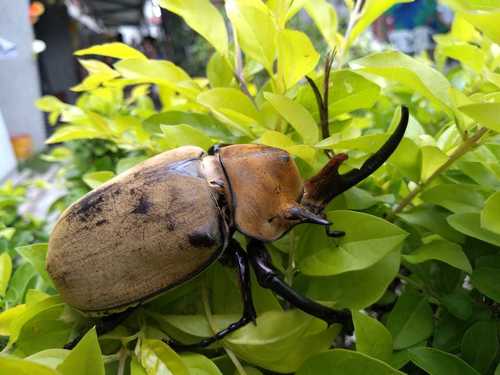
Elephant Beetle
Megasoma elephas
The Elephant Beetle is the heavyweight champion of the backyard jungle. Draped in golden velvet and sporting a massive prehistoric horn, this gentle giant is one of nature's most spectacular nocturnal visitors.
Quick Identification
Size
70-120 mm (2.75-4.75 inches) in length; weight up to 80g (2.8 oz)
Colors
Dull black body covered in a dense layer of microscopic fine yellowish-brown hairs, giving a velvety golden appearance; males have prominent dark horns.
Key Features
- Large bifurcated 'trunk' horn on the head of males
- Velvety yellowish-brown 'fuzz' covering the exoskeleton
- Massive, heavy-bodied appearance
- Strong hooked tarsi (claws) for gripping tree bark
When You’ll See Them
Geographic range
Where Does the Elephant Beetle Live?
The Elephant Beetle is a native icon of the Neotropical realm, spanning from the southern regions of Mexico through the entirety of Central America. Its core range includes countries such as Belize, Guatemala, Costa Rica, and Panama, extending further south into the humid lowlands of Colombia and Venezuela. While they are strictly tropical residents, they are most frequently encountered in protected rainforest corridors where large, old-growth trees provide the necessary decaying logs for their long larval development.
Basemap © OpenStreetMap contributors
Behavior
Elephant Beetles are the gentle giants of the tropical insect world. Despite their intimidating size and the rhinoceros-like horns found on males, they are non-aggressive towards humans. Most of their adult life is spent high in the rainforest canopy, where they are primarily active at night. They use their immense physical strength to navigate dense foliage and maintain their grip on smooth bark against the tropical winds.
Male Elephant Beetles are famous for their ritualized combat. They use their specialized horns as levers to flip and unseat rival males from feeding sites or near potential mates. Interestingly, these beetles are endothermic, meaning they can generate internal body heat to maintain the high muscle temperatures required for flight, which sounds like a miniature helicopter when they are airborne.
EverydayEarth exclusive
Camera Tips
Capturing an Elephant Beetle on camera requires a nighttime strategy, as these giants are strictly nocturnal. The most effective way to lure them into view is through their attraction to light (phototaxis). If your camera is near a porch light or a dedicated UV 'black light' setup in a tropical backyard, you are far more likely to record them as they crash-land nearby.
Placement is key; rather than mounting your camera high up, place it 3 to 5 feet off the ground on a sturdy tree trunk or near a bait station. Since these beetles are heavy and somewhat clumsy flyers, they often land on the ground or lower branches before crawling toward a scent or light source. Ensure your camera is set to a short trigger interval, as they can be surprisingly fast once they start crawling.
For a guaranteed 'money shot,' create a bait station using a mash of overripe bananas, brown sugar, and a splash of beer. Smear this mixture on a tree trunk within the camera's focal range. The fermenting sugars mimic the scent of the rotting fruit and sap they naturally crave. Because of their size, you don't need a macro lens, but a close-focusing distance (1-2 feet) will help capture the incredible 'fuzz' on their golden shells.
Similar Species
Species that look similar or are commonly confused with Elephant Beetle.
Frequently Asked Questions
Record Elephant Beetle at your habitat
Connect a camera to start building your own species record — AI identifies every visitor automatically.