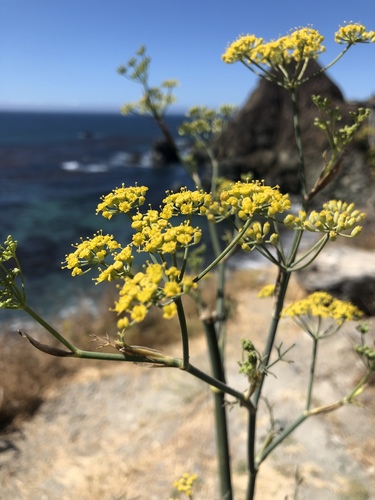
fennel
Foeniculum vulgare
An aromatic giant that transforms your garden into a pollinator paradise. Fennel is the ultimate host plant for swallowtail butterflies and a golden beacon for beneficial insects.
Quick Identification
Size
1.5–2.5 meters (4–8 feet) tall with a spread of 0.6–1 meter (2–3 feet)
Colors
Bright green to glaucous blue-green foliage; vibrant golden-yellow flowers
Key Features
- Feathery, thread-like green leaves
- Compound umbels of tiny yellow flowers
- Tall, hollow, and smooth green stems
- Strong, sweet anise or licorice scent when crushed
When You’ll See Them
Geographic range
Where Does the fennel Live?
Originating from the sun-drenched shores of the Mediterranean, fennel has embarked on a global journey, successfully naturalizing across every continent except Antarctica. While it thrives in its native southern Europe and North Africa, it is now a familiar sight along the coastal cliffs of California, the riverbanks of Australia, and suburban gardens throughout the United Kingdom and North America. This hardy perennial favors well-drained soils and plenty of sunshine, making it a resilient inhabitant of both wild landscapes and urban fringes.
Basemap © OpenStreetMap contributors
Behavior
Fennel acts as a cornerstone species in the backyard ecosystem, functioning more like a bustling insect hotel than a simple herb. Its primary behavior is one of rapid, vertical growth, sending up tall, hollow stalks that provide structural complexity to a garden. During the heat of summer, it produces nectar-rich yellow flowers that serve as a vital refueling station for a diverse array of pollinators, including honeybees, hoverflies, and tiny parasitic wasps that help control garden pests.
Beyond its role as a food source, fennel is famously a primary host plant for the Old World Swallowtail and Black Swallowtail butterflies. Female butterflies seek out the feathery fronds to lay their eggs, and the resulting caterpillars spend their entire early lives camouflaged among the leaves. To humans, fennel is often a dual-purpose plant—valued for its culinary uses and its aesthetic height, though it requires management in certain climates to prevent it from spreading too aggressively into neighboring wild spaces.
EverydayEarth exclusive
Camera Tips
To capture the true essence of fennel, set your camera to a 'Macro' or 'Close-up' mode if available. This plant is a bustling metropolis for pollinators, and you'll want to focus on the yellow flower umbels where the action happens. Because fennel can grow quite tall—often reaching 6 feet or more—mount your camera on a sturdy stake or a nearby fence post at chest height, angled slightly downward to view the top of the flower clusters. If you are using an AI-powered camera like those from EverydayEarth, ensure the 'Insects' or 'Small Wildlife' trigger is enabled to catch the lightning-fast movements of hoverflies and parasitic wasps.
One of the most rewarding ways to document fennel is through time-lapse photography. Set your camera to take a photo every 30 minutes during the peak growing months of June through August. You'll witness the dramatic vertical growth of the feathery foliage and the slow unfolding of the golden flower heads. For those interested in the life cycle of the Black Swallowtail butterfly, place a second camera lower down, focusing on the mid-section of the stems. This is where you are most likely to find the distinctive striped caterpillars munching on the leaves before they form their chrysalis.
Lighting is key for fennel due to its fine, feathery texture. Position your camera so the sun is behind it or to the side; direct backlighting can sometimes wash out the delicate, thin leaves. Early morning light (between 7:00 AM and 10:00 AM) provides a soft glow that highlights the dew on the foliage and catches the first wave of pollinators. If your backyard is prone to wind, use a faster shutter speed setting to prevent the swaying stems from blurring the image. No artificial lures are needed; the natural aromatic oils of the plant are the only bait you need to attract a wide variety of beneficial garden visitors.
Similar Species
Species that look similar or are commonly confused with fennel.
Frequently Asked Questions
Record fennel at your habitat
Connect a camera to start building your own species record — AI identifies every visitor automatically.