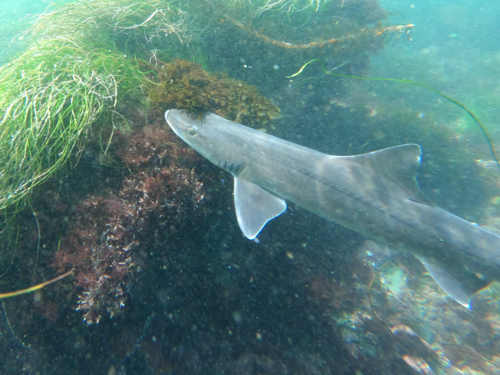
Gray Smooth-hound
Mustelus californicus
The Gray Smooth-hound is a sleek, harmless sentinel of the Pacific shallows. Spotless and streamlined, this elegant shark is a master of the sandy seafloor and a favorite of coastal observers.
Quick Identification
Size
Adults typically range from 0.5 to 1.6 meters (20 to 63 inches) and weigh between 2 and 15 pounds.
Colors
Uniform grayish-brown or bronze on the dorsal side with a clean, pale white underside; notably lacks any spots or bars.
Key Features
- Narrow head with a long, blunted snout
- Smooth, spotless skin without distinctive markings
- Large, oval eyes with visible nictitating membranes
- Two large dorsal fins of similar shape, with the first being larger than the second
When You’ll See Them
Geographic range
Where Does the Gray Smooth-hound Live?
The Gray Smooth-hound is a native resident of the subtropical Eastern Pacific Ocean. Its range is primarily concentrated along the western coast of North America, extending from northern California down through the entire length of the Baja Peninsula and into the Gulf of California. They are most commonly found in the shallow continental shelf waters of the United States and Mexico, where they rely on protected inland estuaries as vital nursery grounds for their young.
Basemap © OpenStreetMap contributors
Behavior
The Gray Smooth-hound is a highly mobile, bottom-dwelling shark known for its graceful cruising along the seafloor. Unlike many larger shark species, they are quite timid and pose no danger to humans, often darting away when approached. They are frequently found in loose schools, especially during the summer months when they congregate in shallow bays and estuaries for mating and pupping.
As nocturnal and crepuscular hunters, they are most active during low-light conditions and rising tides. They use their sensitive snouts and electroreceptors to detect prey buried in the sand. These sharks are viviparous, meaning they give birth to live young that are nourished via a yolk-sac placenta, a trait that ensures their pups have a high survival rate once they enter the nursery grounds of coastal lagoons.
EverydayEarth exclusive
Camera Tips
Capturing the Gray Smooth-hound requires a specialized underwater setup, as they never leave the water. If you live on a waterfront or have access to a pier, a submersible action camera or a tethered underwater 'drop-cam' is your best bet. Position your camera on the sandy seafloor near the edge of eelgrass beds or pier pilings, where these sharks frequently forage for crabs. Use a wide-angle lens to account for the shark’s length and to maximize the field of view in potentially murky coastal waters.
To attract a Gray Smooth-hound to your lens, use a scent-based lure. A perforated PVC tube filled with crushed sardines or oily mackerel acts as an excellent 'chum pot.' Secure the bait container firmly in front of the camera; the sharks will follow the scent trail directly to your lens. Because they are sensitive to vibrations, avoid high-traffic areas and try to deploy your gear during calm sea states to prevent the camera from being tossed by the surf.
For the best lighting, record during the day in shallow water (under 10 feet) where natural sunlight can penetrate. If you are targeting their peak nocturnal activity, use an infrared (IR) light source rather than bright white LEDs. White lights can startle these sensitive fish and cause them to flee, while IR allows for candid behavior. Set your camera to record in 4K at 60fps if possible; even though they look slow, their tail movements are powerful, and high frame rates will allow you to pull sharp, high-quality still frames of their unique facial features.
Similar Species
Species that look similar or are commonly confused with Gray Smooth-hound.
Frequently Asked Questions
Record Gray Smooth-hound at your habitat
Connect a camera to start building your own species record — AI identifies every visitor automatically.