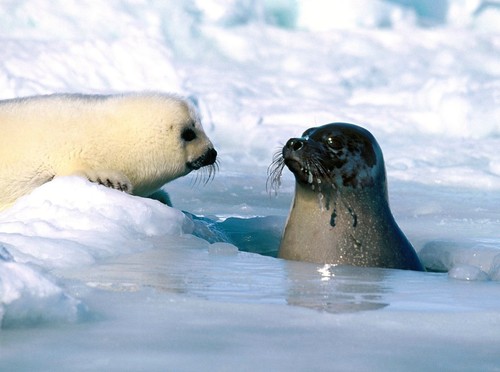
Harp Seal
Pagophilus groenlandicus
The Harp Seal is the ultimate icon of the Arctic, famous for its striking saddleback markings and snowy-white pups. These deep-diving nomads navigate the shifting pack ice of the North Atlantic in one of nature's most impressive annual migrations.
Quick Identification
Size
Adults reach 1.7 to 1.9 meters (5.6 to 6.2 feet) in length and weigh between 120 and 140 kilograms (265 to 310 pounds).
Colors
Adults are silvery-gray with a black face and a characteristic U-shaped black 'harp' on their back. Pups are famous for their pure white coats.
Key Features
- Distinctive black U-shaped 'harp' or 'saddle' marking on the back
- Jet-black face and snout contrasting with silver-gray body
- Robust, streamlined body with short, powerful flippers
- Pups possess fluffy, snowy-white lanugo fur for the first few weeks
When You’ll See Them
Geographic range
Where Does the Harp Seal Live?
The Harp Seal is a native of the North Atlantic and Arctic Oceans, split primarily into three distinct populations. These groups are found in the Northwest Atlantic off the coast of Newfoundland and Quebec, the 'West Ice' near Jan Mayen island, and the 'East Ice' in the Barents Sea north of Russia and Norway. They follow the seasonal advance and retreat of the pack ice, occasionally wandering as far south as the Virginia coast in the United States or the British Isles in Europe during particularly cold winters.
Basemap © OpenStreetMap contributors
Behavior
Harp seals are highly social and migratory marine mammals, known for traveling thousands of miles annually between their Arctic feeding grounds and southern breeding areas. They spend the majority of their lives at sea, appearing only on land or ice to pup, molt, and rest. In the water, they are incredibly agile and vocal, using a variety of clicks, trills, and bird-like sounds to communicate with one another.
These seals are exceptional divers, capable of reaching depths of nearly 300 meters in search of prey and staying submerged for up to 15 minutes. While they are clumsy on solid surfaces, moving with a 'galumphing' belly-slide, they are graceful in the water. They are known for their curiosity, often approaching boats or divers, though they remain wary of land-based predators like polar bears and orcas.
EverydayEarth exclusive
Camera Tips
If you are lucky enough to live along a northern coastline where Harp Seals haul out, camera placement is everything. Position your camera on a low-profile tripod or secured to a rock overlooking known resting spots on the ice or shore. Because these seals move via belly-sliding, keeping the camera at a 'seal's eye view' (about 1-2 feet off the ground) creates the most intimate and engaging footage. Use a wide-angle lens to capture the scale of their colonies, which can number in the thousands during the spring.
Lighting is your biggest challenge in snowy or icy environments. The glare from the ice can easily trick your camera's sensor into underexposing the seal, leaving it looking like a dark silhouette. Set your exposure compensation to +1.0 or +2.0 to ensure the white ice and the seal's silver coat look natural. If your camera allows, use a high shutter speed (1/500s or faster) to freeze the motion of splashing water or the rapid 'galumphing' movement they make when retreating to the sea.
Battery life is significantly reduced in the freezing temperatures where Harp Seals thrive. Always use high-quality lithium batteries, as they perform much more reliably in sub-zero conditions than alkaline or NiMH options. To capture the best behavior, look for the 'whitecoat' pups in late winter; placing a camera near a breathing hole in the ice can yield incredible footage of mothers returning from a hunt. Always ensure you are following local wildlife regulations, as approaching these animals too closely can be illegal and harmful to their health.
Similar Species
Species that look similar or are commonly confused with Harp Seal.
Frequently Asked Questions
Record Harp Seal at your habitat
Connect a camera to start building your own species record — AI identifies every visitor automatically.