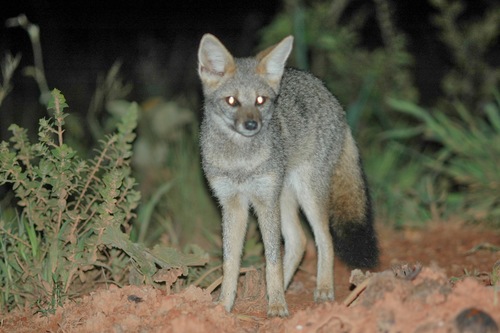
Hoary Fox
Lycalopex vetula
The dainty 'raposinha-do-campo' is Brazil's most specialized fox, a silver-grey shadow that hunts termites instead of rabbits. Endemic to the Cerrado, this diminutive canid is a testament to the incredible biodiversity of the South American savanna.
Quick Identification
Size
Head-body length of 48–64 cm (19–25 in), tail length of 28–36 cm (11–14 in), and weight between 2.5–4 kg (5.5–8.8 lbs).
Colors
Grizzled grey-and-white upper body (hoary appearance), yellowish or cream underparts, reddish-tan ears and legs, and a black-tipped tail with a dark dorsal stripe.
Key Features
- Small, delicate build with a noticeably short muzzle
- Large, prominent ears adapted for detecting insect movement
- Grizzled grey coat with a dark streak along the top of the tail
When You’ll See Them
Geographic range
Where Does the Hoary Fox Live?
This elusive fox is a South American endemic, found exclusively within the central and southern regions of Brazil. Its core range covers the vast Cerrado biome, stretching from the states of Maranhão and Piauí in the north down through Mato Grosso, Minas Gerais, and into the northern fringes of São Paulo. While its range is large, it is strictly tied to the presence of open savanna and is rarely found in the dense Amazonian or Atlantic rainforests.
Basemap © OpenStreetMap contributors
Behavior
The Hoary Fox is a unique canid primarily known for its specialized diet and docile temperament. Unlike its more aggressive cousins, this fox is a specialist insectivore, spending much of its time foraging for termites and beetles in the open grasslands of Brazil. It is largely nocturnal or crepuscular, becoming most active as the sun sets, though it can occasionally be seen during overcast days moving through tall grasses.
Socially, the Hoary Fox is often observed in monogamous pairs or small family groups during the breeding season. They are relatively non-territorial compared to other foxes, often sharing overlapping ranges with neighbors. While they are naturally shy and will flee from human approach, they have shown a remarkable ability to adapt to cattle pastures and agricultural fringes, provided there is enough cover and insect life to sustain them.
EverydayEarth exclusive
Camera Tips
To capture the Hoary Fox on camera, placement is everything. Because they are significantly smaller than the Crab-eating Fox, you should mount your camera low to the ground—roughly 30 to 45 centimeters (12-18 inches) high. Aim the lens toward active termite mounds (termitaria), which serve as the primary feeding hubs for this species. If you find a mound with fresh scratch marks at the base, you have found a prime Hoary Fox 'hotspot.'
Since they are most active under the cover of darkness, ensure your camera has a high-quality infrared flash that won't startle them. Avoid using white light flashes, as this can cause them to abandon the area. For the best results, set your camera to take short 10-15 second video clips; this allows you to observe their unique foraging behavior, such as the 'head-cocking' they do while listening for insects moving underground.
While they aren't easily lured by traditional meat baits, they are curious about scents. A small amount of fruit-based scent or even fatty acid tablets (used by researchers) can encourage them to pause in front of the lens. Focus your efforts during the dry season (May to September) when they are forced to move more frequently to find water and concentrated insect colonies, making their patterns more predictable.
Similar Species
Species that look similar or are commonly confused with Hoary Fox.
Frequently Asked Questions
Record Hoary Fox at your habitat
Connect a camera to start building your own species record — AI identifies every visitor automatically.