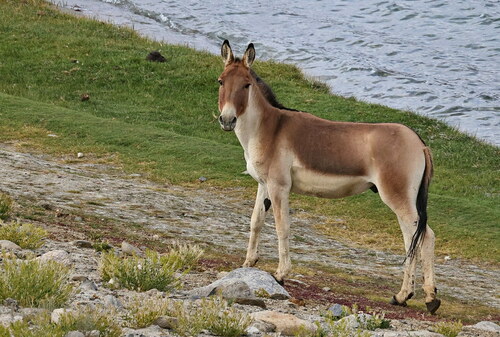
Kiang
Equus kiang
The Kiang is the largest and most majestic of the world's wild asses, a resilient survivor that thrives on the 'Roof of the World.' With its striking chestnut coat and bold white underbelly, it is a true icon of the high-altitude Tibetan wilderness.
Quick Identification
Size
Shoulder height of 132-142 cm (52-56 in); weight ranges from 250-440 kg (550-970 lbs)
Colors
Rich chestnut to reddish-brown upper parts with a starkly contrasting white belly, neck, and legs. A dark dorsal stripe runs from the mane to the tail.
Key Features
- Large, horse-like head with a short, upright mane
- Distinctive white fur extending high up the flanks and legs
- Broad, dark dorsal stripe along the spine
- Thick, shaggy coat that becomes darker and heavier in winter
When You’ll See Them
Geographic range
Where Does the Kiang Live?
Native to the sprawling, high-altitude landscapes of Central Asia, the Kiang is primarily found on the Tibetan Plateau. Its core range is centered in China, specifically within Tibet, Qinghai, and Sichuan provinces, but it also maintains significant populations in the Ladakh region of northern India and northern Pakistan. Smaller, isolated groups inhabit the high valleys of Nepal and Tajikistan, where they roam across vast, treeless steppes at elevations that would leave most other large mammals breathless.
Basemap © OpenStreetMap contributors
Behavior
Kiangs are highly social and intelligent animals that roam the high-altitude steppes in fluid herds. While they don't form permanent harems like some other wild equids, they are often seen in groups ranging from 5 to 20 individuals, though massive aggregations of several hundred can occur when grazing is particularly lush. They are surprisingly curious and less skittish than many wild mammals, often standing their ground to watch humans from a distance before trotting away with a distinctive high-stepping gait.
These animals are incredibly hardy, adapted to survive in some of the most oxygen-thin and coldest environments on Earth. They are exceptional swimmers, frequently crossing icy rivers to reach new grazing grounds. During the breeding season in August and September, stallions become highly territorial, engaging in dramatic displays of dominance, including chasing and biting rivals to protect their access to females.
EverydayEarth exclusive
Camera Tips
Capturing the Kiang on a trail camera requires planning for extreme conditions. Because they live at such high altitudes, battery life is your biggest challenge; use high-quality lithium batteries, as alkaline cells will fail quickly in the sub-zero night temperatures of the Tibetan Plateau. If possible, use a solar-assisted external battery pack to keep the unit running through the winter months when these animals are still active but food is scarce.
Position your camera near natural funnels like mountain passes or well-trodden paths leading to rare water sources or mineral licks. Kiangs are nomadic and follow the best grazing, so 'bottleneck' locations are much more effective than open meadows. Set the camera height at about 1.2 meters (4 feet) to account for their large shoulder height. Angling the camera slightly downward can help capture the white leg markings which are key for identification.
Be aware of the Kiang's innate curiosity. These animals are known to investigate unusual objects in their environment. It is not uncommon for a Kiang to walk directly up to a camera and nudge it with its nose. Using a protective metal security box (bear box) is highly recommended, not just for protection against predators, but to prevent a curious wild ass from accidentally repositioning or damaging your equipment. Set your trigger speed to the fastest possible setting, as their trotting gait is deceptively quick.
Similar Species
Species that look similar or are commonly confused with Kiang.
Frequently Asked Questions
Record Kiang at your habitat
Connect a camera to start building your own species record — AI identifies every visitor automatically.