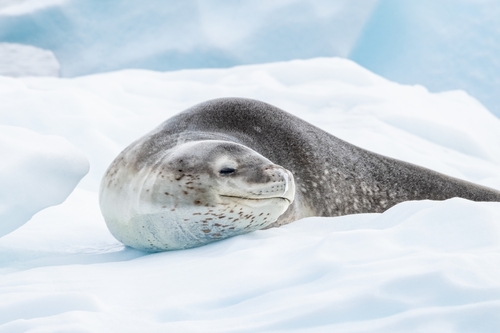
Leopard Seal
Hydrurga leptonyx
The Leopard Seal is the Antarctic's ultimate apex predator, a sleek and spotted powerhouse of the Southern Ocean. Known for its reptilian profile and incredible hunting prowess, it is one of the most mesmerizing sights for any cold-weather wildlife enthusiast.
Quick Identification
Size
2.4–3.5 meters (7.9–11.5 feet) in length; weights range from 200 to 600 kg (440–1,320 lbs), with females being significantly larger than males.
Colors
Dark charcoal to steel grey on the back, transitioning to a light silver or cream belly; characterized by dense black spots across the throat, chest, and flanks.
Key Features
- Massive, almost reptilian-looking head with powerful jaws
- Distinctive leopard-like spotting on a silvery underbelly
- Long, slender body with highly developed fore-flippers for speed
- Unique tricuspid molars designed for straining krill and tearing meat
When You’ll See Them
Geographic range
Where Does the Leopard Seal Live?
The Leopard Seal is a true denizen of the frozen south, primarily inhabiting the vast, shifting pack ice that surrounds the Antarctic continent. While their kingdom is centered in the Southern Ocean, these powerful wanderers are frequently spotted along sub-Antarctic islands such as South Georgia, Macquarie, and the Kerguelen Islands. Younger individuals are particularly known for their nomadic spirits, occasionally drifting as far north as the southern coastlines of Australia, New Zealand, South Africa, and South America during the winter months.
Basemap © OpenStreetMap contributors
Behavior
Leopard Seals are primarily solitary and highly formidable apex predators of the Southern Ocean. Unlike many other seal species that congregate in large colonies, these 'sea leopards' prefer the isolation of the pack ice or the lonely edges of sub-Antarctic islands. They are known for their high intelligence and curiosity, often approaching research vessels or divers to investigate, though their massive size and predatory nature require extreme caution from human observers.
These seals are famous for their vocalizations; during the austral summer, males spend many hours each day singing complex, low-frequency songs underwater to defend territories or attract mates. They are also highly opportunistic hunters, employing a 'sit and wait' strategy near penguin colonies or actively chasing down other seals in the open water. Their social interactions are limited mostly to mating and occasional disputes over prime haul-out spots on the ice.
EverydayEarth exclusive
Camera Tips
Capturing a Leopard Seal on a trail camera requires specialized equipment due to the extreme polar environment. You must use a rugged, waterproof housing rated for sub-zero temperatures. Because these seals haul out onto ice floes or rocky beaches, place your camera approximately 2 to 3 feet above the ground, angled slightly downward. Secure the camera to a heavy rock or use ice screws; these seals are incredibly curious and may attempt to 'interact' with or nudge the equipment with their powerful snouts.
Since these predators are active both day and night, ensure your camera is equipped with high-quality No-Glow Infrared LEDs. A standard white flash can startle the animal or cause aggressive behavior, whereas No-Glow LEDs allow for clear nighttime shots without detection. Set your trigger speed to the fastest possible setting (0.2s or less), as their movements—especially when sliding off the ice or snapping at prey—are deceptively fast for such large mammals.
For battery life in freezing conditions, lithium batteries are non-negotiable; alkaline batteries will fail almost instantly in Antarctic temperatures. If you are setting up near a penguin colony (a prime 'backyard' for these seals), position the camera at the 'exit points' where penguins leap from the water. Leopard seals often patrol these edges. Be sure to check the lens for salt spray or ice buildup regularly, as this is the most common cause of blurred footage in marine environments.
Similar Species
Species that look similar or are commonly confused with Leopard Seal.
Frequently Asked Questions
Record Leopard Seal at your habitat
Connect a camera to start building your own species record — AI identifies every visitor automatically.