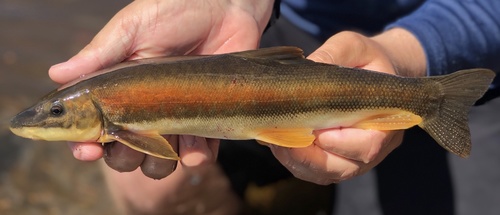
Longnose Sucker
Catostomus catostomus
The Longnose Sucker is a master of the cold, northern depths, easily identified by its unique overhanging snout. A resilient survivor of the Arctic, this bottom-dwelling specialist is a fascinating addition to any underwater backyard observation setup.
Quick Identification
Size
15-25 inches (38-64 cm) in length; typically weighs 1-5 lbs (0.45-2.3 kg)
Colors
Dark olive, brownish, or slate-grey on the back and sides with a contrasting creamy white belly; spawning males develop a vivid, bright red lateral stripe.
Key Features
- Elongated snout that projects well past the subterminal mouth
- Fine, small scales with 90-120 along the lateral line
- Long, cylindrical body shape specialized for bottom dwelling
- Thick, fleshy lips covered in sensory papillae
When You’ll See Them
Geographic range
Where Does the Longnose Sucker Live?
Native to the vast freshwater systems of North America, the Longnose Sucker boasts one of the most extensive distributions of any sucker species. Its core territory stretches from the northern United States through the entirety of Canada and Alaska, reaching as far north as the Arctic Circle. Uniquely, this hardy fish is also native to the rivers of eastern Siberia in Russia, making it one of the very few sucker species to naturally bridge the gap between the North American and Asian continents.
Basemap © OpenStreetMap contributors
Behavior
The Longnose Sucker is a peaceful, industrious bottom-feeder often described as the 'vacuum cleaner' of northern waterways. They possess a specialized, downward-facing mouth designed to suction up algae, small invertebrates, and organic detritus from rocks and silt. While they are often solitary during the winter months when they retreat to deep lake waters or large river pools, they become highly social and active during their spring spawning migrations.
These fish are known for their incredible physical resilience, capable of surviving in the frigid, oxygen-depleted waters of the Arctic that would be fatal to most other species. They are generally wary of human presence and will dart away if they perceive heavy vibrations or shadows from the bank. However, they are not aggressive and coexist easily with other native fish like trout and whitefish, often serving as a vital prey source for apex predators like eagles, bears, and pike.
EverydayEarth exclusive
Camera Tips
To capture the Longnose Sucker on camera, you need to think underwater. These fish are bottom-dwellers, so the best placement for an AI-powered camera is at the bed of a clear stream or along a rocky lake shoreline. During the spring spawning season, usually between April and June, they move into shallow, gravel-bottomed tributaries. This is the 'golden window' for sightings. Position your camera in 1 to 3 feet of water, angled slightly upward or parallel to the bottom to capture their unique profile and snout.
Because they are scent-oriented foragers, you can encourage a Longnose Sucker to linger in front of your lens by using a weighted mesh bait bag. Filling a small bag with crushed salmon eggs, nightcrawlers, or even canned corn and securing it just out of the camera's frame—but close enough for the scent to drift—will draw them in. They spend significant time vacuuming the substrate, so a bit of 'chumming' in the gravel can result in hours of interesting feeding footage.
Clarity and lighting are your biggest challenges underwater. Mount your camera on a heavy base or a weighted tripod to prevent it from vibrating in the current, which can blur the image or trigger false AI detections. If you are filming in a backyard pond or a slow-moving creek, try to time your recordings for mid-morning when the sun is high enough to penetrate the water, providing the natural light needed to distinguish the fine scales that separate this species from the more common White Sucker.
Similar Species
Species that look similar or are commonly confused with Longnose Sucker.
Frequently Asked Questions
Record Longnose Sucker at your habitat
Connect a camera to start building your own species record — AI identifies every visitor automatically.