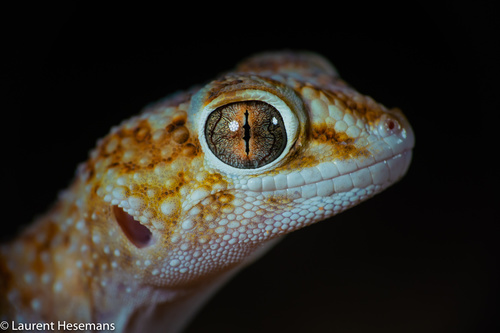
Namib Giant Ground Gecko
Chondrodactylus angulifer
A master of the desert sands, the Namib Giant Ground Gecko is a robust, nocturnal lizard known for its striking banded patterns and impressive vocalizations. This terrestrial specialist avoids the trees, preferring to hunt the desert floor under the cover of darkness.
Quick Identification
Size
12 to 18 cm (4.7 to 7 inches) in total length; weighs approximately 20-40 grams.
Colors
Sandy brown to reddish-orange base with cream-colored spots and dark, wavy horizontal bands; pale white underbelly.
Key Features
- Large, robust head distinct from the neck
- Velvety skin with fine, non-overlapping scales
- Thick, cylindrical tail used for fat storage
- Large copper eyes with vertical slit pupils
- Straight, unwebbed toes with small claws
When You’ll See Them
Geographic range
Where Does the Namib Giant Ground Gecko Live?
Native to the arid regions of Southern Africa, the Namib Giant Ground Gecko is a specialist of the desert and semi-desert biomes. Its core range spans across much of Namibia, extending southward into the Northern Cape province of South Africa and eastward into the southwestern fringes of Botswana. These geckos thrive in the unique ecosystems of the Kalahari and the Namib, where they have adapted to survive in some of the world's most extreme temperature fluctuations.
Basemap © OpenStreetMap contributors
Behavior
The Namib Giant Ground Gecko is a fascinating nocturnal predator that spends its daylight hours tucked away in deep, self-excavated burrows. These burrows serve as essential climate-controlled retreats against the harsh desert sun, reaching depths where the temperature remains stable. Unlike many other geckos known for their climbing prowess, this species is strictly terrestrial, possessing straight toes perfectly adapted for scurrying across sandy and gravelly substrates rather than clinging to vertical surfaces.
These geckos are notably vocal, producing a variety of clicks and squeaks to communicate with rivals or potential mates during the breeding season. When threatened, they adopt an impressive defensive posture, standing high on their legs with an arched back and a gaping mouth to appear larger and more intimidating. While they are generally solitary, their territories may overlap in areas where prey like termite mounds are abundant.
EverydayEarth exclusive
Camera Tips
To capture the Namib Giant Ground Gecko on camera, you need to think low. These are strictly ground-dwelling lizards, so mount your AI-powered camera just 5 to 10 centimeters (2-4 inches) off the ground. Aiming the lens across a flat sandy clearing or near the entrance of a visible burrow—look for small mounds of freshly excavated sand—is your best strategy for a clear shot.
Because they are strictly nocturnal, ensure your camera has a high-quality infrared (no-glow) flash. These geckos have highly sensitive eyes, and a standard white light flash will often cause them to retreat immediately or result in overexposed 'white-out' images. Placement near the base of small desert shrubs is ideal, as these plants attract the insects the geckos hunt and provide the cover they prefer when moving between burrows.
Setting your camera to a high-sensitivity trigger with a short 'burst mode' or a 10-second video clip is highly recommended. These geckos move in quick, erratic dashes followed by long periods of statue-like stillness. A single photo might capture only a tail or a blur, but a video can record their unique 'high-stepping' gait and potential vocalizations. If you are in a backyard setting, avoid using insecticides, as a healthy population of ground-dwelling insects is the best 'bait' to keep these geckos visiting your camera site.
Frequently Asked Questions
Record Namib Giant Ground Gecko at your habitat
Connect a camera to start building your own species record — AI identifies every visitor automatically.