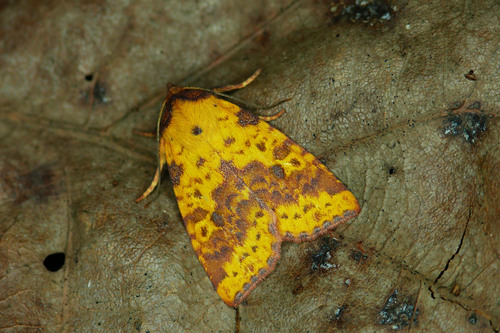
Pink-barred Sallow
Xanthia togata
With its vibrant canary-yellow wings and royal purple accents, the Pink-barred Sallow is a stunning late-season visitor that brings a touch of tropical color to the autumn garden.
Quick Identification
Size
Wingspan 27-33 mm (1.06-1.30 inches); body length approximately 12-15 mm (0.47-0.59 inches)
Colors
Bright canary-yellow forewings with a bold purplish-pink or reddish-brown central band; head and collar are typically the same pinkish-purple hue.
Key Features
- Distinctive purplish-pink head and thorax
- Bright yellow forewings with a wide, dark pink central band
- Small dark spots or 'stigmata' in the outer wing area
- Wings are held in a tent-like fashion when at rest
When You’ll See Them
Behavior
The Pink-barred Sallow is a quintessential autumn moth, often emerging just as the leaves begin to turn. Unlike many of its cousins that hide during the day, this species is frequently encountered by gardeners when they disturb ivy or low-growing shrubs where the moth rests. They are relatively docile insects, often remaining perfectly still when discovered, relying on their bright colors to blend in with fallen yellow leaves.
As nocturnal fliers, they spend their nights searching for energy-rich food sources to fuel their late-season mating. They are particularly drawn to the flowers of ivy, which provides one of the last major nectar sources of the year. While they are solitary, you may find several individuals congregating on a single patch of flowering ivy or around a backyard light source on a damp, mild autumn evening.
EverydayEarth exclusive
Camera Tips
To capture the Pink-barred Sallow on your backyard camera, timing and lure placement are everything. Since these moths are active during the cooler autumn months, place your camera near a 'sugar station.' You can create a simple bait by boiling brown sugar, black treacle, and a bit of stale beer into a thick syrup. Paint this mixture onto a tree trunk at eye level and aim your camera at the patch. This 'sugaring' technique is often more effective than light traps for Sallow species, especially on windy nights when they prefer to stay low.
If you are using an AI-powered camera with a built-in light, position it near a patch of flowering ivy. Ivy is a magnet for the Pink-barred Sallow in September and October. For the best identification shots, set your camera's focus distance to a macro or close-up range (if adjustable) and ensure it is angled slightly downward toward the bait or flowers. These moths tend to land and walk around the bait rather than hovering, making them excellent subjects for still captures.
Because these moths are small, the distance between the lens and the subject should be between 6 to 12 inches for maximum detail. If your camera allows for burst mode, enable it; moths often vibrate their wings to warm up before taking flight, and a burst will help you get that perfectly sharp image of their intricate wing patterns. Look for them specifically on mild, overcast nights with a touch of humidity, as they are less active during dry, clear, and cold snaps.
Similar Species
Species that look similar or are commonly confused with Pink-barred Sallow.
The Sallow
The Sallow lacks the purplish-pink head and thorax, and its central wing markings are usually less solid and more mottled.
Barred Sallow
The Barred Sallow has much darker, orange-brown forewings and lacks the bright 'canary yellow' base color.
Orange Sallow
Has a more pointed wing tip and a distinctly orange-tinted ground color rather than bright yellow.
Frequently Asked Questions
Record Pink-barred Sallow at your habitat
Connect a camera to start building your own species record — AI identifies every visitor automatically.