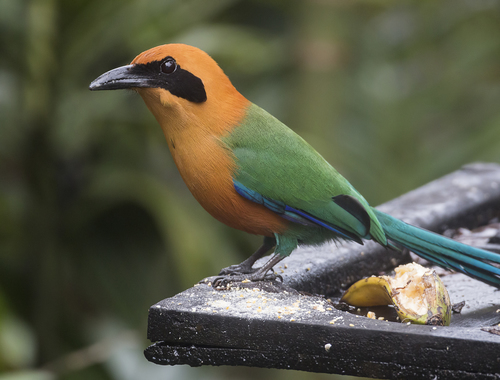
Rufous Motmot
Baryphthengus martii
With its striking cinnamon plumage and iconic pendulum tail, the Rufous Motmot is a crown jewel of the Neotropical forest. A master of the 'sit-and-wait' hunt, this large bird brings a splash of prehistoric elegance to any backyard or trail camera setup.
Quick Identification
Size
Length: 42-47 cm (16.5-18.5 in); Weight: 145-200g (5.1-7.1 oz)
Colors
Rich rufous-cinnamon head, neck, and breast; deep forest-green back, wings, and lower belly; black facial mask; single black spot on chest.
Key Features
- Broad black facial mask through vibrant red eyes
- Rich cinnamon-rufous head and upper chest with a single black spot
- Long blue-green tail often ending in two racquet-shaped tips
- Large, heavy bill with slightly serrated edges
When You’ll See Them
Sightings on EverydayEarth
May 13, 2026
A Rufous Motmot is perched on a mossy branch overlooking the fruit feeder. It remains still, scanning the area before moving out of view.
Behavior
The Rufous Motmot is a classic "sit-and-wait" predator of the tropical understory. It spends much of its day perched motionlessly on mid-level branches, scanning the surrounding foliage and ground for movement. Despite its large size and bright colors, it can be surprisingly difficult to spot until it moves or calls. It is most famous for its "pendulum" tail movement, where it swings its long tail feathers back and forth in a rhythmic fashion, a behavior often triggered when it detects a potential predator or a human observer.
Socially, these birds are typically found alone or in pairs. They are highly territorial and use deep, resonant hooting calls to announce their presence, which can be heard from a significant distance through dense forest. While they are not overly shy, they prefer the shade and safety of thick vegetation over open spaces. When prey is sighted, they launch into a sudden, powerful sally to snatch the target before returning to a perch to beat the prey against a branch before swallowing.
EverydayEarth exclusive
Camera Tips
To successfully capture a Rufous Motmot on your trail camera, placement is everything. Unlike ground-dwelling birds, these motmots prefer the mid-story. Mount your camera 5 to 8 feet high on a tree trunk, angled slightly downward toward a known perching branch or a clearing in the undergrowth. They are creatures of habit and will often return to the same "lookout" branch day after day. Look for horizontal branches that have a clear view of the ground, as these are prime hunting spots.
Because they live in the deeply shaded forest interior, lighting can be a challenge. Ensure your camera is set to a high-quality photo or video mode with good low-light performance. If your camera allows for adjustable trigger speeds, set it to the fastest possible setting; while the bird sits still for long periods, its strike at prey is lightning fast. Using a camera with a quiet shutter is also beneficial, as sudden noises in the quiet forest understory may cause them to fly off before you get multiple shots.
If you are trying to attract them to a specific spot in a backyard or garden, water is your best tool. A large, elevated birdbath or a natural-looking water feature near the forest edge is an irresistible draw for a Rufous Motmot looking to bathe or drink during the heat of the day. Unlike many smaller birds, they prefer larger basins where they have room to land and dip. Plant native fruiting trees or palms nearby, as the oily fruits are a staple of their diet and will keep them returning to your camera's field of view.
Finally, consider the timing of your monitoring. While they are active throughout the day, the hour just after sunrise is when they are most vocal and active in defending their territory. Set your camera to record 20-30 second video clips; this length is usually enough to capture their iconic tail-swinging behavior, which is one of the most rewarding sights for any backyard wildlife enthusiast. During the rainy season, pay extra attention to cameras near fruiting trees, as the abundance of food increases their activity levels.
Similar Species
Species that look similar or are commonly confused with Rufous Motmot.
Frequently Asked Questions
Record Rufous Motmot at your habitat
Connect a camera to start building your own species record — AI identifies every visitor automatically.