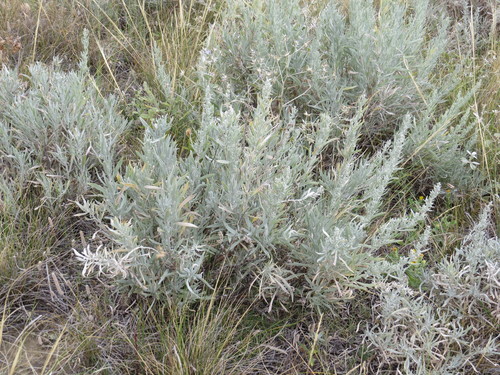
Silver Sagebrush
Artemisia cana
A resilient icon of the American West, the Silver Sagebrush is more than just a plant; it is a shimmering sanctuary for high-plains wildlife.
Quick Identification
Size
A medium-sized shrub typically reaching 0.5 to 1.5 metres (20 to 60 inches) in height and similar width.
Colors
Distinctive silver-grey to pale green foliage with a velvety texture; older stems have grey-brown shredded bark.
Key Features
- Narrow, unlobed silver leaves (unlike common big sagebrush)
- Intense aromatic fragrance when crushed
- Sprouts from the root crown after fire or grazing
- Small, yellowish-green flower clusters in late summer
When You’ll See Them
Geographic range
Where Does the Silver Sagebrush Live?
Silver Sagebrush is a quintessential plant of the North American West, thriving across the vast interior of the continent. Its native range extends from the southern reaches of the Canadian prairies in Alberta and Saskatchewan down through the Great Plains and the Intermountain West of the United States. It is a common sight in the landscape of Montana, Wyoming, and the Dakotas, stretching as far south as the northern parts of New Mexico and Arizona, and westward into the Sierra Nevada of California. This species is particularly adapted to the moisture-rich margins of the sagebrush steppe, where it dominates the landscape near seasonal water sources.
Basemap © OpenStreetMap contributors
Behavior
Silver Sagebrush is a resilient perennial shrub that plays a vital role in the high-desert and prairie ecosystems. Unlike many other sagebrush species, it has the unique ability to resprout from its root crown or via underground rhizomes after its top growth is damaged by fire or heavy browsing. This makes it a particularly hardy survivor in the face of natural disturbances. Its growth cycle begins in early spring, with flowering occurring in late summer and autumn, often providing a late-season pollen source for local insects.
As a foundational species, it acts as both a protector and a provider. It creates a microclimate beneath its canopy that is cooler and more humid than the surrounding open ground, allowing for the germination of grasses and forbs. In the wild, it forms loose thickets that provide essential structural cover for ground-nesting birds and small mammals, while its deep root system helps stabilize soil along stream banks and coulees.
EverydayEarth exclusive
Camera Tips
When using a trail camera to capture wildlife around Silver Sagebrush, placement is key. Position your camera at a low height—about 12 to 18 inches off the ground—and angle it slightly upward if the shrub is tall. This allows you to capture the movement of small mammals like Pygmy Rabbits or ground-dwelling birds like Greater Sage-grouse that use the shrub for cover and forage. Because Silver Sagebrush often grows near water or in coulees, these areas are natural corridors for larger animals like Mule Deer and Pronghorn who browse on the leaves.
One technical challenge with Silver Sagebrush is its high reflectivity. The tiny, silver hairs on the leaves can cause "white-out" or IR bloom when the camera’s infrared flash hits them at close range during the night. To combat this, set your camera back at least 6 to 10 feet from the foliage, or place the camera in a spot where the flash is angled away from the densest part of the silver leaves. Using a "Low Glow" or "No Glow" flash can also help prevent overexposure of the plant’s bright surface.
For those interested in the plant's own lifecycle, use a time-lapse setting during the late summer months. Silver Sagebrush undergoes a subtle but beautiful transformation when it flowers in August and September. Setting your camera to take one photo every hour during daylight will reveal the slow unfurling of its yellowish flower heads. Additionally, ensure your camera has a fast trigger speed or is set to a higher sensitivity, as the wind often whips the flexible branches of this shrub, which can either trigger false positives or create a beautiful motion-blur effect in high-end photography setups.
Similar Species
Species that look similar or are commonly confused with Silver Sagebrush.
Big Sagebrush
Look for leaves with three distinct lobes at the tip, whereas Silver Sagebrush leaves are narrow and unlobed.
Sand Sagebrush
Sand Sagebrush has much finer, almost thread-like leaves and is typically found in sandier, more arid soils than the moisture-loving Silver Sagebrush.
Rubber Rabbitbrush
While similar in color, Rabbitbrush has bright yellow, showy flower clusters in the fall and lacks the distinct 'sage' scent of the Artemisia genus.
Frequently Asked Questions
Record Silver Sagebrush at your habitat
Connect a camera to start building your own species record — AI identifies every visitor automatically.