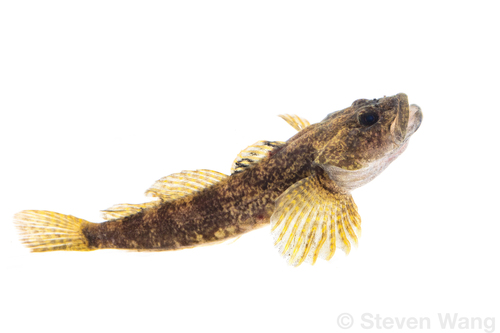
Slimy Sculpin
Cottus cognatus
Meet the master of the stream bed, a fish that hops instead of swims. The Slimy Sculpin is a cryptic, cold-water specialist that plays a vital role in our healthiest freshwater ecosystems.
Quick Identification
Size
6 to 12 cm (2.4 to 4.7 inches) in length; typically weighs less than 30g (1 oz)
Colors
Mottled brown, olive, or grey with a creamy white underside; breeding males turn nearly black with an orange-edged first dorsal fin
Key Features
- Large flattened head with upward-facing eyes
- Wide fan-like pectoral fins for 'hopping'
- Tapering body with no swim bladder
- Three pelvic fin rays
When You’ll See Them
Geographic range
Where Does the Slimy Sculpin Live?
The Slimy Sculpin is native to the northern regions of North America and parts of eastern Siberia. Its core range spans from the Great Lakes and the upper Mississippi River drainage through the vast boreal forests of Canada and into the icy waters of Alaska and the Arctic. In the southern parts of its range, it survives as a glacial relict, found only in isolated, cold-water spring runs in states like Iowa, Wisconsin, and Virginia.
Basemap © OpenStreetMap contributors
Behavior
The Slimy Sculpin is a fascinating bottom-dweller that has traded traditional swimming for a unique 'hopping' motion. Because it lacks a swim bladder—the organ most fish use for buoyancy—it stays naturally heavy, allowing it to remain pinned to the bottom of fast-moving, rocky streams without being swept away. It spends the majority of the day hiding in the crevices of the substrate, emerging only under the cover of darkness to hunt.
This species is highly sensitive to water quality and temperature, making it a key indicator of a healthy ecosystem. While they are generally solitary, males become diligent guardians during the spring spawning season. They will clean a site under a flat rock and defend the eggs from predators until they hatch, often fanning them with their large pectoral fins to ensure they receive enough oxygen from the cold current.
EverydayEarth exclusive
Camera Tips
To capture high-quality footage of a Slimy Sculpin, you will need a waterproof action camera or a specialized underwater trail camera. Focus on 'riffles'—those shallow, bubbling sections of a stream where the water flows quickly over cobble and gravel. These areas are rich in oxygen and insect larvae, making them the primary hunting grounds for sculpins at night. Secure your camera to a heavy weighted base or a low-profile tripod and place it directly on the stream bed, ensuring it is level and facing a small patch of open gravel surrounded by larger rocks.
Lighting is your biggest challenge, as these fish are strictly nocturnal. Use a camera equipped with high-intensity infrared (IR) LEDs to avoid startling the fish with visible light. If your camera allows for it, a short video trigger (15-30 seconds) is better than photos, as the Slimy Sculpin’s 'hopping' movement is its most distinctive feature. If you aren't seeing any activity, try placing a small mesh bag filled with crushed aquatic insects just off-camera; the scent will often draw them out from under their hiding rocks within minutes.
Timing is critical. While they are present year-round, the spring spawning season (April to June) offers the best chance to see more active and territorial behavior. Be mindful of water clarity; after a heavy rain, sediment can cloud the water and ruin your shots. Wait for a period of dry weather when the stream is running clear. Always tether your camera to a fixed object on the bank with a stainless steel cable to ensure a sudden rise in water level doesn't sweep your equipment downstream.
Similar Species
Species that look similar or are commonly confused with Slimy Sculpin.
Frequently Asked Questions
Record Slimy Sculpin at your habitat
Connect a camera to start building your own species record — AI identifies every visitor automatically.